
Whether you’re doing a little bit of home improvement or repair, or using it to put together something to help with a project, PVC pipe is super handy and easy to work with, with one exception. It can be a pain to cut if you don’t know what you’re doing!
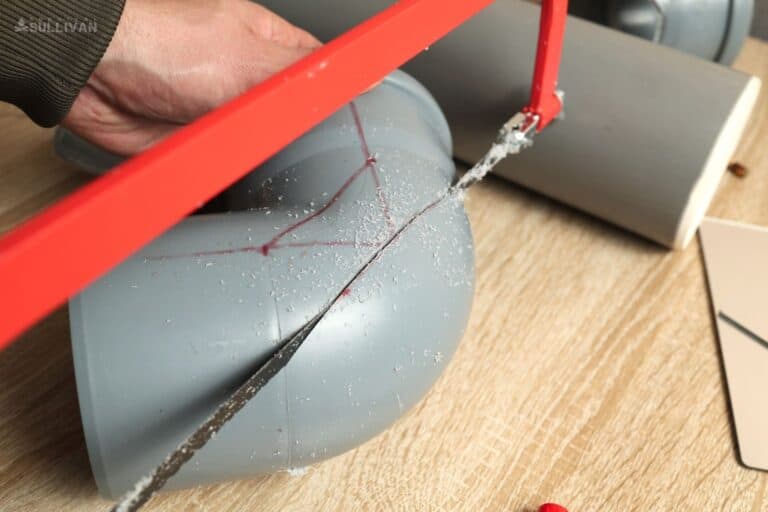
It’s tough stuff, and using the wrong tool or the wrong approach will leave you with pipe ends that are not square or else so covered with burrs that you won’t be certain of getting a good glue bond.
You don’t need to fret, but you do need to level up your game a little bit! Happily, it’s easy and safe to do so with the seven methods I will teach you for cutting PVC pipes yourself. Read on and we will get right into it.

Power Shears
Far and away the single best method for cutting PVC pipe, of any size, is with an appropriately capable set of power shears, sometimes called PVC shears or cutters.
These handy tools use a standard or proprietary battery pack to drive a single, stout cutting blade right through the pipe you’ve got sitting in the cradle. Most toolbox-sized variants can handle pipe up to a couple inches in diameter or smaller. There’s really not much to it assuming the tool’s charged: place the pipe in the cradle, making sure it’s fully seated, and simply pull the trigger.
You’ll have a nice, clean, square, and nearly burr-free cut in just a second. About the only thing that can go wrong is if you allow the angle of the pipe to move while the cutting process is underway. Aside from the cost of the unit itself and spare batteries, there are no downsides. If you do a lot of work with PVC, make sure you get one of these!
Miter Saw
Yep, the miter saw you use for your woodworking projects and framing can work pretty darn good on PVC pipe, too. A blade optimized for fine cutting with a high tooth count is ideal, but if you go slow you can also squeak by with a rough-cut blade.
The miter fence means keeping a super square cut is effortless, and this works just as well as the power cutters above if all you care about is speed and volume. Unfortunately, even with the best blade the cut isn’t going to be as smooth, and a little bit of cleanup may be necessary.
Something else to keep in mind is that using a miter saw for PVC pipe will generate a prodigious amount of shavings and dust, so consider wearing a respirator and be ready for significant workspace cleanup afterwards.
Hand Tube Cutter
Sometimes simple is the way to go, and it doesn’t get much better than a handheld, hand-powered tube cutter for small jobs. While most of these are optimized for weaker, flexible plastic or rubber tubing and not PVC, I’ve found they work just fine on the small-diameter stuff if you keep the blade sharpened or keep a fresh, sharp blade in the unit.
It’s quick and easy, and virtually foolproof, but there are some hang-ups to know. First, you’re going to wear out quickly if you’re trying to do high-volume cutting of tougher stock with one of these. It’s only good for the smallest PVC or for small jobs. Second, trying to use a cheap or flimsy tube cutter on tough pipes can cause the tool to flex or even break.
Trying to make this work if the blade is dull, chipped, or otherwise mistreated is also an exercise in futility, so don’t waste your time. Assuming everything goes well enough, you should be pleased with the results, and the cuts will need little, if any, deburring.
Ratcheting Tube Cutter
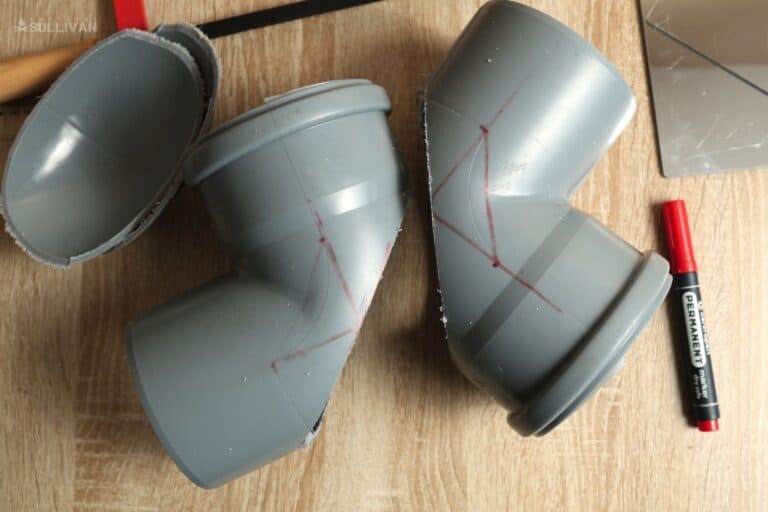
For tougher jobs that can still be handled by a manually operated tool, a ratcheting tube cutter is the way to go. They work basically like the hand tube cutter we just talked about, or if you prefer, a de-powered set of shears, but they rely on the mechanical advantage of a ratcheting system to incrementally slice through even tough pipe.
You’ll be pumping the handles repeatedly to make that happen, so even though it doesn’t rely entirely on your own muscle this can still wear you out on long jobs requiring lots of cuts.

Nonetheless, that’s about the only downside aside from the fact they still can’t handle the largest diameters effectively, and that they are not ideal for older pipes that may crack under pressure. You’ll have to change the blades or keep them sharp, too.
Portable, effective, quiet, and reliable, this is one of my very favorites…
Hacksaw
There’s a very good reason why most pros and seasoned DIY enthusiasts reach for a hacksaw when it’s time to cut PVC. It just works. It doesn’t take much effort, it does the job quick, and it leaves a surprisingly clean cut, though it will still need a little bit of deburring.
With a practiced hand or a miter box, you’ll get super square pipe ends, too. Hacksaw blades require changing after considerable use, so you’ll have to account for that, but this is one of the very best bets in terms of cost-effectiveness ratio, and they are good for lots of other things.
Do keep in mind that, like the miter saw, this tool will generate a considerable amount of dust. Bring your vacuum or grab a broom and dustpan!
Handsaw
A common handsaw, of any type, can be used on PVC pipe in a pinch but it’s a pale imitator of the hacksaw. It’s going to leave a rough, jagged edge on the pipe that will require sanding or a sharp deburring tool to correct. The teeth of the saw will jump and chatter on the pipe, too, making it much harder to hold a straight line when cutting.
Use this in a pinch if you’ve got no other choice, but that’s all I would recommend it for.
Length of Wire or String
Now here’s an old-timer’s trick the real pros use when they are in a jam. If you don’t have any other tools, or if you have a piece of installed pipe that can’t be reached with any of your tools, you only need to whip out a length of sturdy, rough wire or string and apply plenty of elbow grease.
Friction alone will begin to abrade and in some cases melt through the pipe when you pull it back and forth across the surface. As you expect, this will take time and plenty of energy, but it can get through the small-diameter stuff with surprising speed. The real hard part is making a square cut. Substantial correction is often needed if you’re not simply trying to demo or remove an installed or stuck pipe.

Tom Marlowe practically grew up with a gun in his hand, and has held all kinds of jobs in the gun industry: range safety, sales, instruction and consulting, Tom has the experience to help civilian shooters figure out what will work best for them.