
Many preppers plan on hunting to procure food or supplement stores when in a survival situation, but the return on investment is much higher with fishing. In freshwater or saltwater, standing or moving, fishing tends to be easier, less labor-intensive, and, most importantly, scalable.

These attributes alone should make it your methodology of choice for getting dinner whether you are bugging in or bugging out. Best of all, there’s a lot we can learn from our ancestors and the ways that they fished.
Adding some primitive fishing techniques to your survival repertoire now can keep you from going hungry later. I’ll tell you about five proven primitive fishing techniques below along with their pros and cons.
Hooks and Gorges
For so many people, the idea of fishing without a line and hook of some kind is unthinkable. Fishing pole, fishing hook, a little bait, and pretty soon you’ll be catching fish. Right? Right!
But as it turns out, you don’t need a modern, high-tech fishing pole, a bevy of hooks, and hyper-specialized lures to catch fish.
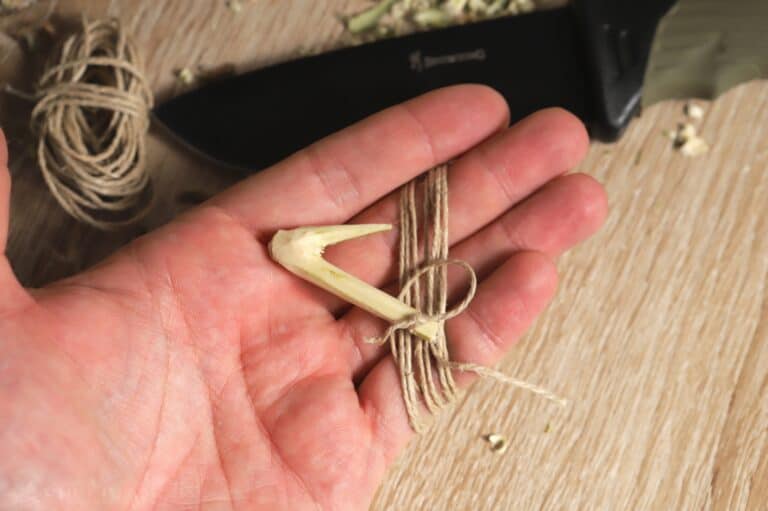
Traditional, primitive hooks, including curved barb hooks and straight or forked gorge hooks, can get the job done. You already know what a barb hook is, but a gorge hook is any kind that is designed to be swallowed whole and catch in the fish’s throat.
In antiquity, these were often made of wood or bone, carved or ground one at a time by skilled makers. Today, you could craft either kind from a variety of materials, including scavenged metal, ceramic, and even stuff like circuit boards.
Combine your hook with some purpose-made fishing line or something like paracord, thread, or natural cordage, and you’ll be ready to fish in a lake, pond, river, stream, or even in the ocean.
Nets
One of the oldest and also most important primitive fishing methodologies is the use of nets. Many different peoples around the world at different times throughout history have relied on nets almost entirely to feed their populations with fish.
The idea of using a net is simple: cast it into the water, and fish, by the bucketload, will get caught up in it. In reality, there is a fair bit of nuance and many different kinds of nets depending on your application.
Casting nets are the kind most people imagine, being thrown into the water or sometimes dropped to catch lots of fish at one time. Dip nets are handheld and used to scoop up individual fish wherever you can reach them.
A gill net is a special type of vertical net that is usually strung between two points and often employed in moving water. Nets are a great option for survivors because they can be used as part of a team or set up to passively catch fish while you do something else.
The biggest downside to nets is that making them yourself is difficult, and it takes a very long time. Nets will also regularly get damaged in use, and that means repairs. Even so, this is an invaluable skill, especially if you’re able to tailor your net and strategy for your local fishing spots.
Traps and Weirs
There is no creature on Earth that can’t be trapped one way or another, and fish are no different. It might be surprising to some, but fish trapping goes back a long way in our shared history – like a really long way! We’re talking at least 6,500 BC and very likely a lot longer than that.
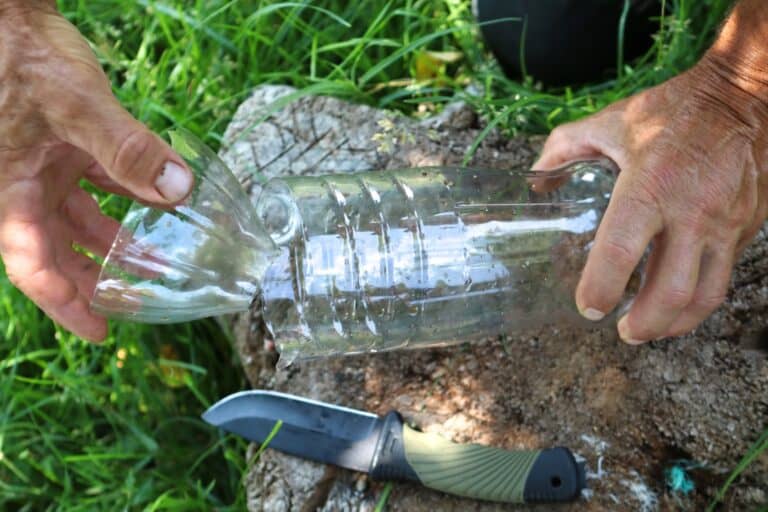
A trap can be something as rudimentary as stones or other obstacles piled up in a stream that will funnel fish into a tight spot that makes them easy to catch, or as sophisticated as a weir, something that will completely block a stream, lagoon, or other water feature and direct fish into a sort of circular containment area that they can’t get out of.
You can make traps from scraps like 2-liter bottles, baskets, screen door mesh, and a lot more, and employ them everywhere from moving water like rivers and the aforementioned streams to tide zones, lakes, ponds, swamps, and more.
Like all other kinds of trapping, the huge advantage here is that traps work completely passively, meaning you can set multiple traps and increase your chances of success while reducing your workload over time. This is a huge benefit for preppers.
The downside is that building one that it’s just right and adjusting it until it functions 100% is more art form than skill, something that requires lots of experience.
Spears
If sitting around waiting for fish to bite isn’t your thing, spearfishing is probably for you. The spear is one of mankind’s oldest weapons, used for both hunting and self-defense. If you are in or near any water source that you can see through, meaning you can see the fish to aim at them, spearfishing is viable.
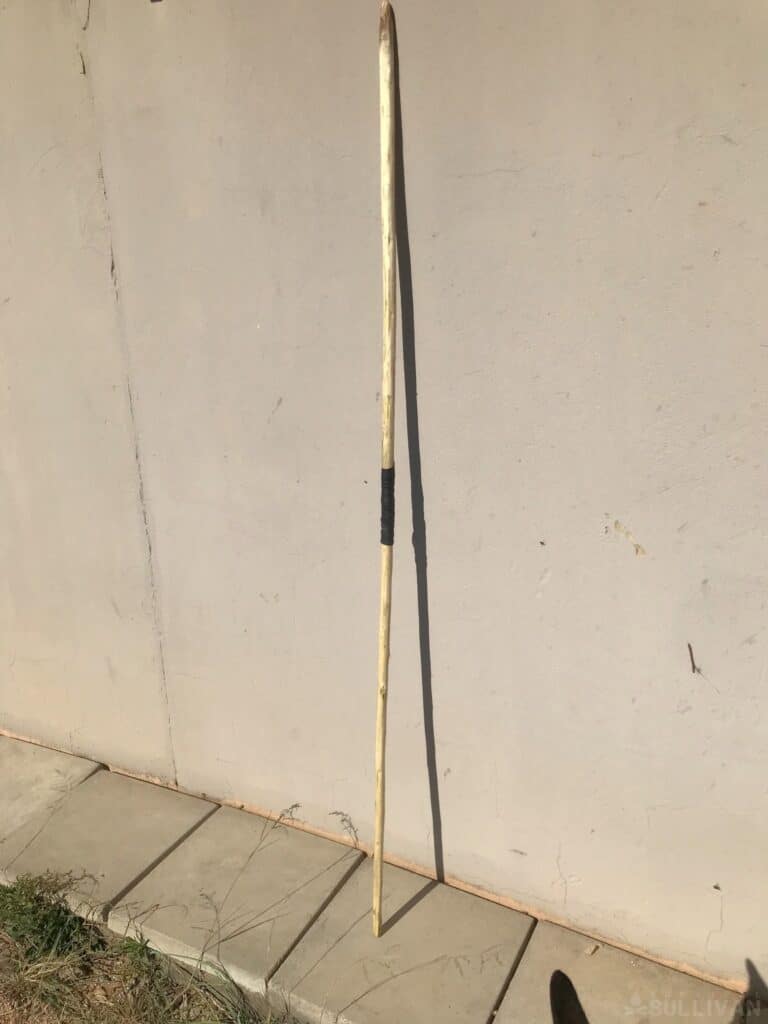
It’s also a simple thing to tailor different spears for different quarry: small, multi-pronged gigs for smaller fish, and larger, longer ones with carved or ground heads for large fish.
This is a good technique to lean on as long as the water is favorable because spears are very easy to assemble and easy to use.
By Hand!
Believe it or not, it’s possible to catch fish with your bare hands. Don’t believe it? Look no further than the popularity of catfish noodling today.
If the water is shallow or you’re after specific fish that like to hide in holes, under sunken logs, or in similar places, you are in business.
Now, you’ll need to be careful. Fish that are big enough to catch in this way can fight back. You might run into the sharp spines of a catfish or, if you’re unlucky, encounter something that isn’t a fish at all, like a snapping turtle.
Compared to other methods of fishing, it’s physically intensive and riskier, but it might be the most expeditious way to get fish in hand and then onto the fire when you are very hungry.


Tom Marlowe practically grew up with a gun in his hand, and has held all kinds of jobs in the gun industry: range safety, sales, instruction and consulting, Tom has the experience to help civilian shooters figure out what will work best for them.