
Everyday Carry (EDC) is a crucial step to take in being prepared for whatever life throws at you from day to day. Although we may know that certain events are looming, the reality is that we cannot ever predict when and where an emergency will occur or just how serious it will be. Even the best survival gear is useless if you don’t have it with you when the unexpected happens.
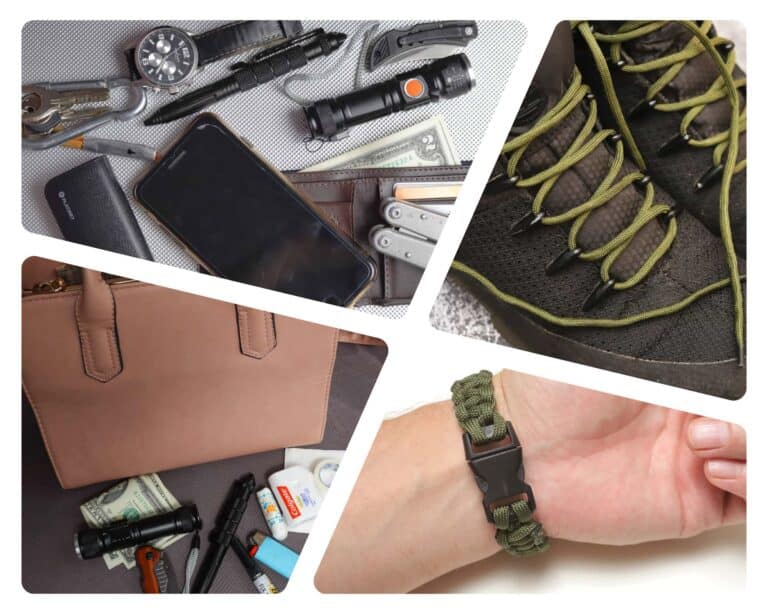
Tragically, those people who went to work just like any other day on 9/11 at the World Trade Towers and those the teachers that walked into Sandy Hook Elementary School on December 14, 2012, had no warning of what was to come. That unpredictability is the reasoning behind EDC. If you are new to the world of prepping and are wondering what to focus on first, having a survival kit and making it a habit of carrying it with you at all times is a great place to start.
A good strategy should not just focus on preparing only for specific events or emergencies that could occur but rather consider the best items to carry to help you in a variety of situations that could happen. Your EDC should help with everyday tasks you need to do and make dealing with minor inconveniences easier. But it should also help keep you alive in a crisis if one occurs.
When you put emergencies into categories, it can help you to plan for the items that you need to have at the ready somewhere on your person at all times. We’re going to identify all the places you can keep your EDC items, but first, we need to know what to carry. Think about what you would be helpful to have if you:
- Missed your connecting flight at the airport resulting in an overnight delay with no luggage
- Were followed by a stranger as you as you walked to your car at night
- Broke your glasses while on vacation
- Got lost on a day hike on an unfamiliar mountain with no cell service
- Witnessed or were involved in a car accident on the way to work
- Lost your bank card late on a Saturday afternoon
- Were stranded at work overnight due to a weather-related event such as a tornado, snowstorm, or hurricane.
- Dropped your car keys somewhere at a concert
- Were caught up in the middle of a protest turned riot
- Became a victim of a mugging or carjacking
- During a canoe trip, your canoe capsizes and is carried down the river
EDC items fall into these broader categories:
- Security & Protection from Elements
- Food & Water
- Medical & Personal Hygiene
- Communication & Navigation
All of the above situations are also unpredictable and beyond your control for the most part. Many of them aren’t huge emergencies but are more like inconveniences. Some of them are life-threatening or can be if you aren’t prepared at all.
So, when you look at each of the above inconveniences or emergencies, think about what item or items would be very helpful to have on hand. Those are the items that should be part of your EDC kit and accessible on your person at all times.
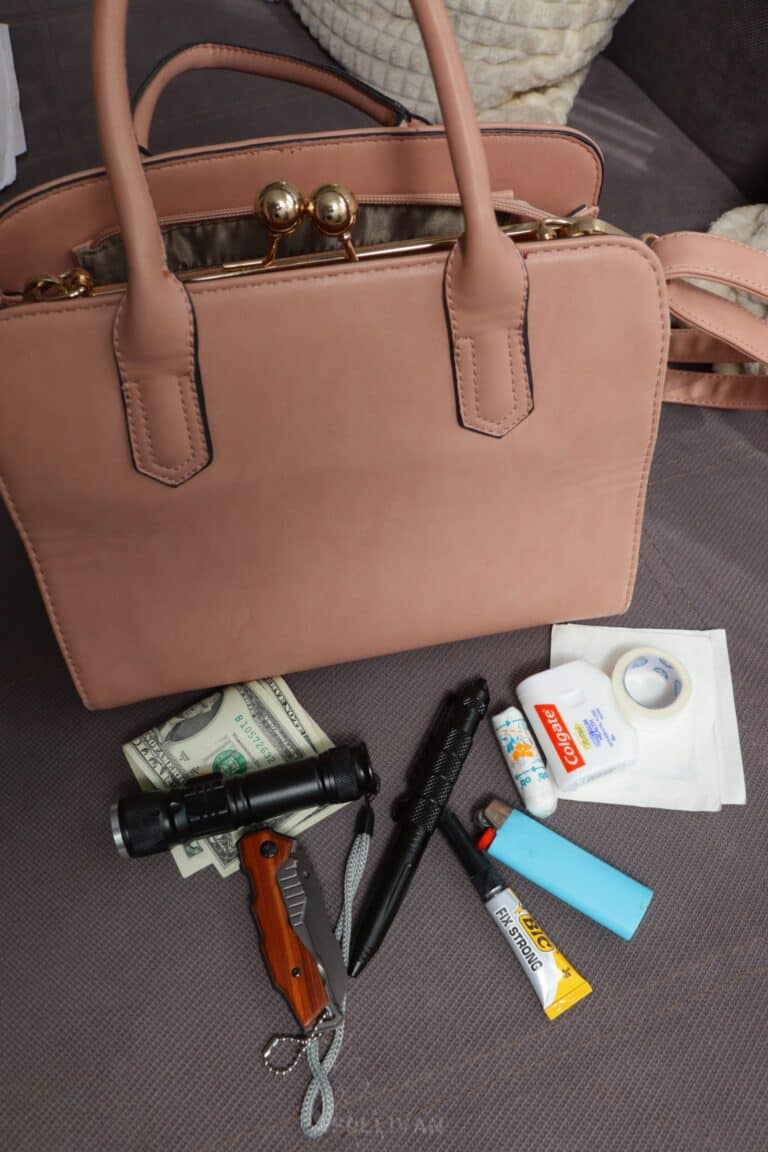
In Your Purse
If you already carry a purse, this is an ideal place to keep your EDC items because of it#s larger volume and the fac that it’s something all women wear. When choosing one, look for as many compartments or pockets as possible. This will ensure quick access and the inner pockets will help conceal some of the more sensitive gear.
Choose a high-quality purse that won’t visually draw attention to you. For large pocket purses without a lot of different smaller pockets, consider getting one of the many different purse organizers. These can be added to your purse for quick access.
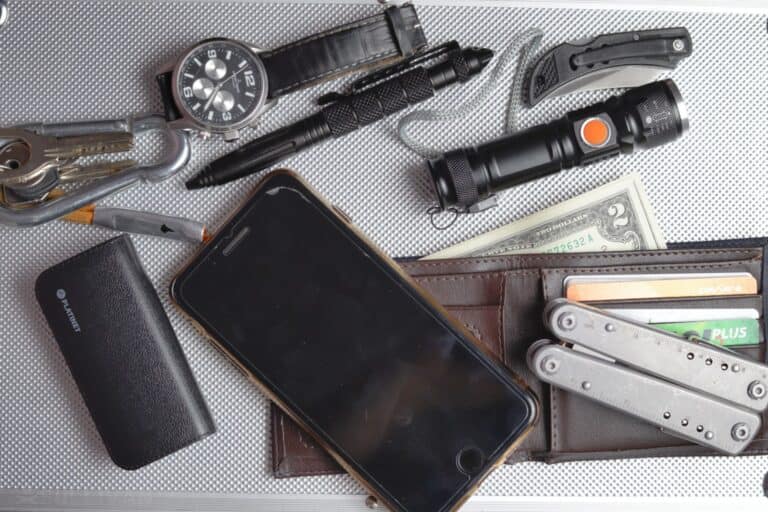
In Your Wallet
This is something most everyone carries around, the only downside being that it’s not very accommodating to most EDC items. Some of the things you can fit in a wallet that may help your survive include:
- a credit card knife
- credit card multi-tool
- a fresnel lens
- cash
- bandages
- safety pin
… and I’m sure you can come up with a few more.
In Your Pockets
Pockets have been used to carry useful items for many years and thus are still one of the most ideal places to keep your EDC items. Consider pockets in your shirt, pants, shorts, a vest, or a jacket as places to keep your EDC items and evenly distribute their overall weight. EDC items in your pockets should be limited to items that you need to be able to pull out quickly. A shirt, pants, or jacket with hidden interior pockets for more valuable items is also a good option.
If you’re going to make use of your pockets for carrying EDC items and especially if you’re limited to just two or three pants or jacket pockets, you can also make use of something like the Maxpedition E.D.C. Pocket Organizer to keep pocket EDC items secure and organized.
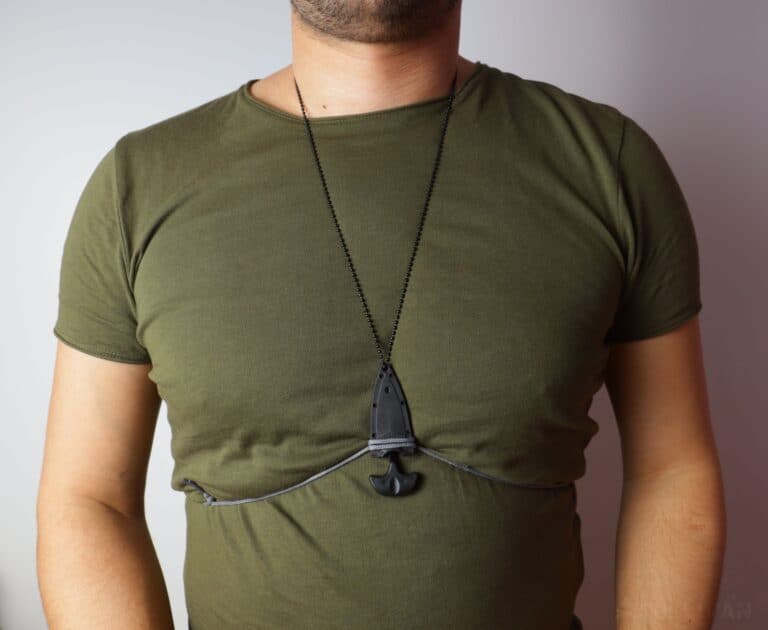
Wear Them
Another place to keep your EDC items to distribute the weight of the items and make them more convenient to carry is to simply… wear them. There are unlimited places to wear your EDC items, but here are some of the more common places:
A lanyard around your neck can be a great way to carry items you need to access quickly but keep out of sight. House keys, a whistle, or mini-cache tube can come in handy. A bandana worn around the neck can also be used for a wide variety of things including as a sling, as a weapon, dust filter, or even to help filter water.
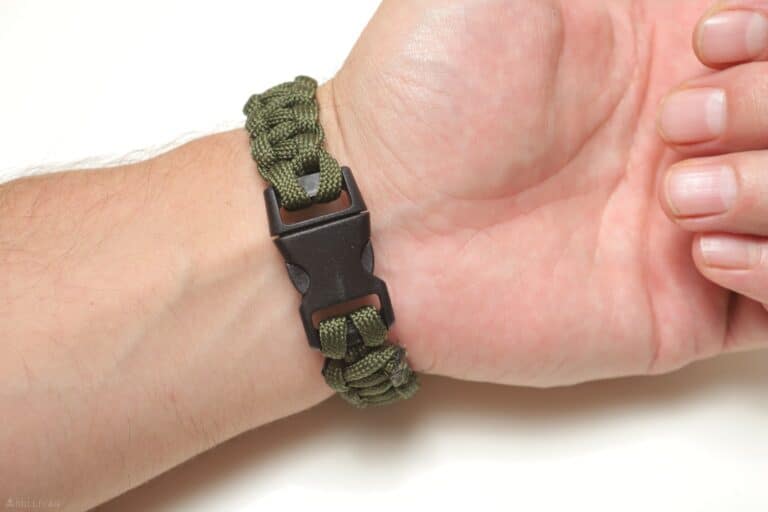
Around Your Wrist
Around your wrist or ankle is another great place. Items on your wrist are convenient and accessible without being in the way, and anything worn around your ankle can be kept out of sight if needed by your sock or pant leg.
Consider wearing a watch, a personal alarm, or if your budget can withstand it, get an Adventure Bracelet from Wazoo which comes with 18 different survival items all incorporated into the bracelet.

In or on Your Shoes
Consider your feet another convenient place to keep your EDC items. Swap your shoelaces for paracord or get these Kuba Kickz to add to your shoes. It’s the perfect way to carry our EDC items without adding much extra weight or calling too much attention to yourself.
In the case of a mugging or robbery, you can make a money belt around your waist part of your EDC kit so that you’ll always have some hidden cash available. You can also find pants with a hidden waist compartment if you prefer. Some preppers may want to consider a small waist pouch, fanny pack, or runner’s belt.
On the market today, you will find sap gloves that you can wear on your hands as part of your EDC to assist with self-defense. Sap gloves are specially designed to include steel balls at the knuckle points, so your fist packs an extra punch if needed for self-defense.
Just like sap gloves, a sap cap that you wear on your head can be a discreet way to ensure you always have a little extra impact to your swing. Sap caps are designed with added weight in the cap so that if you remove it and hit someone, the impact is maximized. It may not knock your opponent out, but it should distract them long enough for you to get a head start at putting some distance between the two of you.
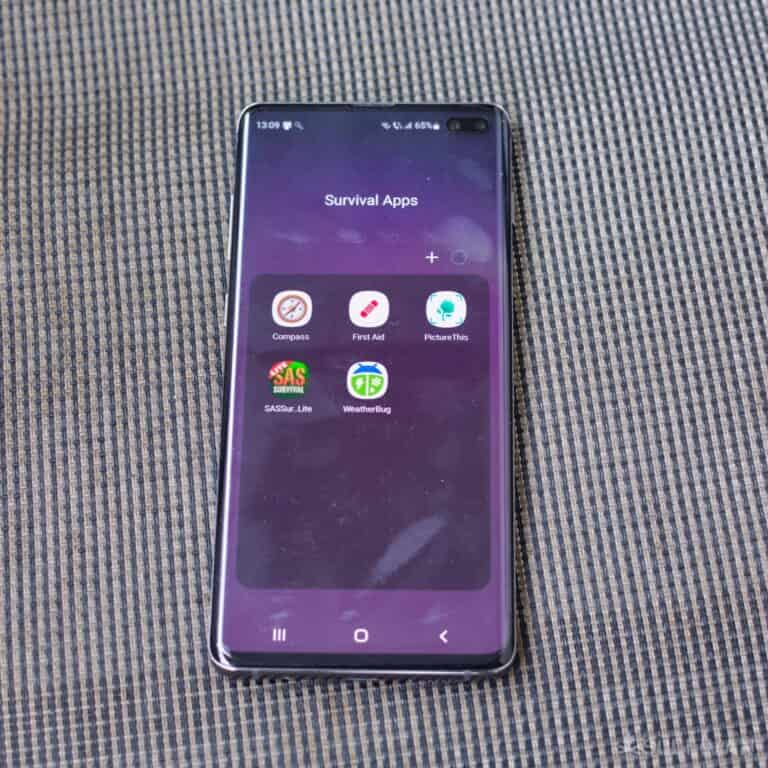
On Your Cell Phone
Your cell phone is another great place to keep your EDC items. Most people are already used to carrying their cell phone with them at all times and have gotten used to keeping track of it.
Add a fully charged spare phone battery and solar charger to your EDC kit. As long as your phone is charged, you can use it to store a lot of reference and resource information. It can even be a backup storage for digital copies of important documents such ID, birth certificates, home inventory lists, etc.
Whether you choose to download reference books on plant identification, edible plants, or first aid techniques or choose to take advantage of the many different survival apps that are out there, your cell phone can come in handy. Consider cell phone apps and reference material such as:
- SAS Survival Guide
- Knots 3D
- Ultimate Survival Manual
- Smart Compass
- First Aid by American Red Cross
- Wild Edibles
- Weatherbug
- Police Scanner (EdgeRift, Inc.)
- My Nature Animal Tracks
- Army Survival Guide
- BootPrint Pocket Survival
- On Your Keychain
Another convenient place to keep your EDC items is on your keychain. Just about every adult and most teens are in the habit of carrying a keychain with them everywhere they go. It’s something you guard carefully already. Adding these to your keychain is a great way to expand your EDC kit without the need to remember to carry or keep track of “extra” items.
There are many ways to expand your keychain to include EDC items, and much of what you choose to include will be a matter of personal preference.
If you regularly carry your keychain in your pants pocket, you’ll need to carefully consider the weight of items that you add to it to keep it from being too heavy and bulky. Some people even carry two separate keychains, one in the left pocket, one in the right pocket to more evenly distribute the weight.
Keychains can also be used in conjunction with a carabiner so you can attach them to a belt loop to keep them from accidentally falling out of your pocket.
Below are some examples of keychain EDC items to consider:
- Carabiner
- Keychain Whistle
- Personal Alarm
- multitool
- Mini-flashlight
- USB Drive
- Mini or Button compass
- Seatbelt cutter/glass breaker
- Mace or pepper spray
When it comes to being prepared, there are many EDC items that will come in handy during not only minor situations but also in an emergency or crisis.
When you initially see a list of EDC items like the ones on our EDC mega list referenced above, you may think it’s impossible to carry all those items every day. But when you consider all the of the different places that you can keep your EDC items to distribute the weight and bulk, it becomes easier to see how much you can carry.
The type of items that you can carry as part of your EDC kit will also depend on the laws in the state where you reside as well as any state or country you may visit. There may also be special restrictions on what you can carry depending on the building or environment that you are in.
What you can carry with you to a formal work or school environment may be different than what you can carry at other times of the day or week. This is especially true for items like knives, firearms, etc. If restrictions apply, consider dividing your EDC into two separate kits, one set of items that you carry with you always and another set of items that you add whenever you are not at work or school.
If you’re not in the habit of carrying an EDC kit yet, our recommendation is that you start with basic survival items like fire, water, shelter and continue to add additional items over time. It will be important for you to be able to signal for help or otherwise communicate with others to call for help if you are trapped in one place.
Expand your EDC kit gradually by adding items to those things you already carry every day such as your keychain, phone, wallet, or purse.
Where do you carry your EDC items? Did we miss your favorite place to keep yours? Let us know in the comments below.


Born and raised in NE Ohio, with early memories that include grandpa teaching her to bait a hook and watching her mom, aunts, and grandmothers garden, sew, and can food, Megan is a true farm girl at heart.
For Megan, the 2003 blackout, the events of 911, and the increasing frequency of natural disasters like Hurricane Katrina, spurred a desire to be more prepared. Soon to be living off-grid, this mother of four and grandmother of ten is learning everything she can about preparedness, survival, and homesteading.