
Some disasters can kill you after a few minutes, or even a merciful few moments, of pain and terror. Others, though, might stretch out the pain, misery, and agony over years. What sort of terrible calamity could do such a thing? How about an economic collapse?
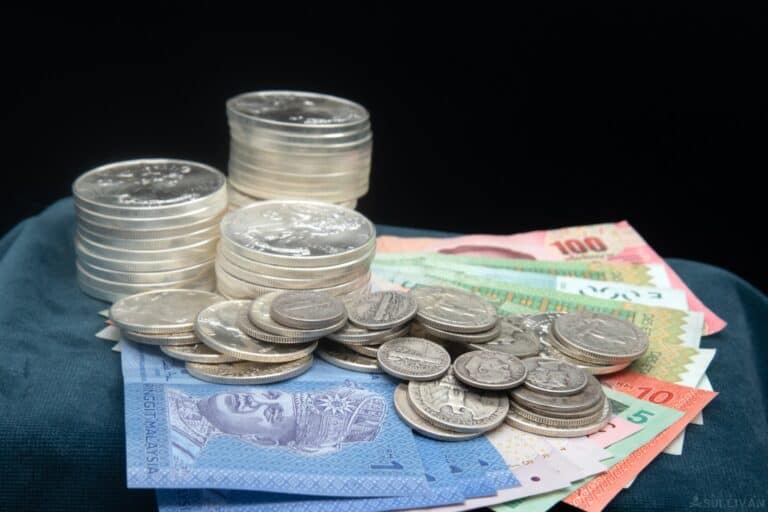
An economic collapse, by any means, is one of those situations that most preppers just don’t think too much about compared to other natural disasters and man-made threats.
But all preppers, including you and me, should start worrying about it. When the economy collapses and your dollar is devalued to the point of total uselessness, you might be facing extreme financial hardship, homelessness, and a loss of access to survival necessities.
You and your loved ones might be subjected to a years-long trial of horrific poverty, lack, and a total breakdown or absence of civic services. It’s a pretty grim picture, yes? That’s why you need to prepare for a dollar collapse specifically.
Below I’ve got a guide that will tell you what to expect, how to prep for a financial disaster, and how to cope with certain intangibles. Brace up, and let’s get going.
Will an Economic Collapse Really Be a Survival Situation?
Yes. That’s because an economic collapse has just as much likelihood of stripping actual survival necessities away from you as any other kind of disaster, only it’s unlikely to do it as quickly.
Without money to buy things, or without any goods available to purchase, you won’t have a roof over your head, food to eat, running water, and so forth.
Even if you can provide these things yourself or own them “free and clear”—a concept that actually doesn’t exist in the United States anymore—the resulting strain on supply networks, public infrastructure, and more means that required secondary services like electricity might be spotty or non-existent, further hampering your efforts.
Furthermore, in times of dire trouble like this, desperation and a decrease or even cessation in policing always lead to huge spikes in crime, correlating directly with threats to your safety.
A recession is one thing, but an actual economic collapse is a society-toppling event, one that you must treat seriously.
Timeline of the Collapse
The first thing you need to understand is that an economic collapse isn’t a discrete event like the occurrence of a tornado, the outbreak of a riot, or an industrial accident…
There are many contributing factors leading up to the onset of the event, and during and after the collapse people will argue about when it “actually” started.
Likewise, don’t expect people on the news or anywhere else to come out and slap a label on the thing so you know when the balloon has gone up and you need to act.
You can think of an actual economic collapse as a disease, and all of the following symptoms will start to manifest as the situation drags on and gets worse and worse.
Note that each of these symptoms can be deleterious to your overall well-being or even pose dire threats by themselves, and accordingly, I’ll tell you what to look out for and what to do about it or prepare for in the timeline below.
First Days
Stock Market Crash
When the economy starts to tank, consumer spending slows down, and investor confidence plummets, the stock market is going to tumble.
Often the first and most momentous sign that a genuine financial collapse is going to occur, by the time this happens, it’s usually too late to do anything about it if you own stocks yourself, but you should take this as a warning to get ready for rough days ahead.
Your Response: as mentioned, if you’ve got stocks it’s already too late. The time to cash out is before the market is in freefall. However, a plummeting market means it’s time to take action and start putting your planning into gear.
Start making those calls for alternate employment, checking your stash, and getting in contact with your family members or members of your survival group.
Currency Devaluation
Hot on the heels of the stock market cratering, you’ll notice marked inflation. This will be most immediately felt at the grocery store and at the gas pump.
Your dollars aren’t going to go as far, and they’ll be stretched thinner and thinner with every day, maybe even every hour that goes by. This is a double whammy because the money you are making isn’t as valuable, and the things you need cost even more.
Your Response: if there’s anything that you desperately need at this time, get it while the getting’s good…
Not only will it probably just not be available in the near future, but it will be priced into the stratosphere if it is. Ideally, you will have stocked up on everything you need well before this point, but if you haven’t, know that the clock is ticking.
Bank Runs
We’ve got lots of historical financial crashes to look at throughout the Western world and elsewhere, all throughout the 20th century.
One thing that invariably happens during these times is a sudden, pronounced surge of people looking to pull their money out of the bank. That’s because when banks go under, your money goes with it…
And don’t depend on the FDIC or anything else to save your bacon here; the money might be nearly worthless by this point, and it’s getting worse all the time, but if you don’t have it stuck under the mattress it will disappear when the banks buckle. Don’t depend on ATMs being functional or having money, either.
Your Response: you need a substantial stash of cash on hand for dealing with the aftermath of any crisis, even an economic meltdown like this.
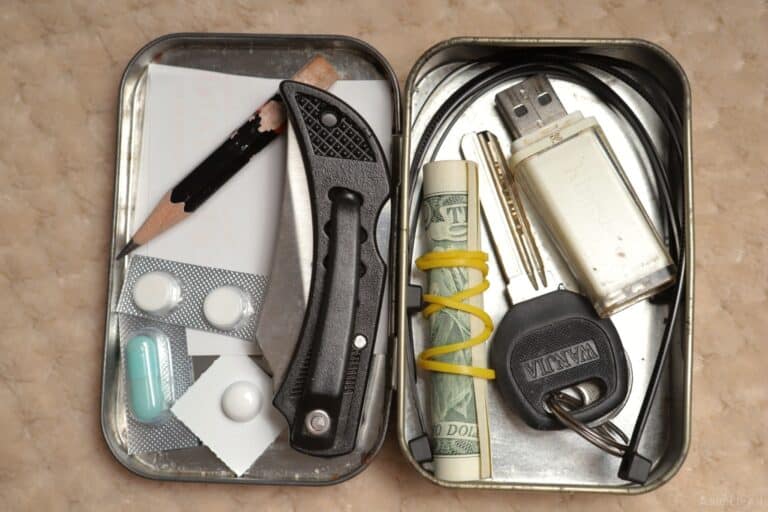
Make sure you have enough money on hand to cover multiple months of rent, mortgage payments, and other critical necessities.
Panic Buying
Just like I told you to go out and get what you need right away, you can count on other scared citizens doing the same. Panic buying will start immediately, but likely slowly and at a small scale as anxiety and uncertainty take hold and paralyze most people into inaction.
This won’t last, though, and as news spreads at the speed of social media concerning how bad things are and how much worse they are going to get, there will be a stampede on the groceries and every other store.
Your Response: sit tight. This will be real panic buying, and irrational people can be dangerous. However, check in with your friends, family, and neighbors to make sure they have what they need and help them if you can.
Consider also that you can be prepared to capitalize right now by trading a surplus of what you have for other goods that you need or things that are universally valuable, like precious metals.
Initial Civil Unrest
An individual person, even one in the middle of a scary and stressful situation, is capable of acting intelligently and in a mostly understandable manner. Great throngs of people, though, tend to act like witless beasts during times like this.
Civil unrest will spark off almost immediately once people realize what is at stake and what is going to come.
Look for riots, arson, mass shoplifting, an uptick in self-harm, and other violence. This will start and be most pronounced in the cities, but will eventually make its way out even into urban areas, or start there.
Your Response: do not, under any circumstances, approach shoplifters, rioters, or anyone engaging in any sort of activity.
Increase your personal security posture and be alert for threats when you are out and about and at home. You are entering a new era where the rule of law will be unevenly enforced, weak, or absent entirely.
First Few Weeks
Widespread Business Closures / Mass Layoffs
As the dominoes start to fall in the economy, you’ll notice businesses, in all sectors, starting to contract. It will start with reduced store hours, then a fewer number of days open, and eventually indefinite or permanent closure.
This will hit small businesses extremely hard, as most small business owners operate on relatively thin margins and have little capital put away to weather storms like this.
Even if they do, that capital will be greatly devalued. But not too long thereafter, major retailers and large corporations will start suffering much the same.
Your Response: you are highly likely to lose your job during this time.
If you’ve prepped properly and follow advice that I’ll give you later on in this guide, hopefully, you can land on your feet through a combination of having survival necessities on hand and diversifying your income streams or employment opportunities.
Major Supply Chain Disruptions
Businesses make things and do things. When these businesses are operating at reduced capacity or go out of business, those things don’t get made or get done. This, in turn, will affect other businesses, reduce consumer spending, and slow down commercial business-to-business interactions.
This is the equivalent of throwing a pound of sand in an already beleaguered gearbox. It will affect all levels of society, from small, hometown retailers to massive service providers.
Another contributing factor is employees not showing up for work or quitting because it is no longer worth their while. Do not count on anything being routinely available or available at all.
Your Response: you must be prepared to grow, raise, craft, or otherwise provide what you need, or be prepared to go without. There is no other option…
Cultivating your own DIY and grassroots solutions for things you have to have is one possible response, as is stockpiling certain things ahead of time.
Note this can have life-threatening consequences: if medications are unavailable or incredibly rare, you or someone else in your family who needs them might be in serious trouble.
Some Utilities Become Unreliable
Even electricity, water, sanitation, and other services can be affected by the economic crisis. Money very literally makes modern society run, and so when that money is devalued to uselessness, electricity might become spotty or just intermittently available.
Just because you can pay your bills doesn’t mean you’ll have utilities! This can be an especially big problem for rural cooperatives, but it’s not out of the question that cities can suffer from impacted services too.
Your Response: have alternate means for procuring water, providing for sanitation, and if possible, generating your own electricity.
A well can be a lifesaver if you can power the pump, and green energy systems like solar cells or windmills might keep critical technology like your refrigerator turned on.
Sanitation can be trickier, but a properly maintained septic system can be a lifesaver if you don’t want to resort to a slit trench. Garbage can be piled at a nearby dump, or burned if absolutely necessary.
Government Economic Measures (Rationing, Price Controls, etc.)
As it always does, the federal government will swoop in and apply the incorrect remedy to the problem at hand, making things way worse.
Government-mandated rationing and price controls will interfere with the necessary, natural market and other economic corrections that must take place for society to heal. This will further strain supply chains and businesses that are already on fire and failing.
This move will be celebrated by some people, but you should pay close attention because it is likely to affect private sellers also; being accused of price gouging will likely be criminalized.
Your Response: pay close attention and listen for any federal, state, or local government edicts concerning the selling of essential goods. Price and quantity controls are likely to apply.
Do not run afoul of them and attract attention from the government, who would be eager to make an example of “scalpers” to appease panicky and suffering people.
First Months
Hyperinflation Fully Sets In
Have you been keeping up with everything we’ve been talking about so far on this timeline? Good, because as the months roll on, hyperinflation will set in.
This means that the value of the dollar will sink so low that you’ll need an astronomical amount of currency to buy even the most rudimentary goods.
This is the sort of situation we saw in post-World War I Germany, and various countries in Africa, where people needed a literal briefcase full of cash to buy a loaf of bread or a gallon of milk.
During such a time, if you’re going to get anything at all, you’ll have to trade something of genuine value to get it, and it won’t be fiat currency.
Your Response: cash is going to do you no good during a time like this. Don’t burn it or use it as toilet paper, because there’s always a chance that it might recover.
Instead, start looking for alternate means to get the things you need, either trading goods for goods, services for goods, or using something that is perennially valuable like precious metals. We’ll talk more about that later…

Housing Market Likely Collapses
By the time we are this far along, the housing market is going to sink like a fishing boat that’s been hit by a cannonball. Foreclosures will be rampant, and that includes multi-family and commercial real estate.
Just because you are in an apartment and can pay your rent doesn’t mean you’ll get to stay there. Likewise, you can’t expect any mercy from the banks just because the entire country is in turmoil.
Losing your home and subsequent homelessness will be a very real threat unless you own your home and property already. Even then, usurious tax increases, increases in insurance, and other financial scheming are likely.
Your Response: be prepared for this eventuality by keeping in touch with friends, family, and anyone else that can offer you and yours a place to stay should you be kicked out or driven out of your home.
Do everything possible to pay off your mortgage under the circumstances. The good news is that you can use the now-devalued currency to do it, and your mortgagor will still have to accept it if you have a legally binding contract.
Health Care Services Overwhelmed
It’s one of the last things people expect to happen in times like this, but you must remember that in America the healthcare system is just a business like any other, and like all other businesses, the operability of the healthcare system, along with the quality of its services and goods, will be tanking.
Expect problems with insurance coverage, assuming you are able to maintain it. Wait times and the quality of care are going to go way, way down.
Malpractice, misadventure, and good old-fashioned human error will lead to bad outcomes and cost lives with increasing frequency. Expect some hospitals and regional care centers to close.
Your Response: start brushing up now on basic first-aid skills. If at all possible, cultivate a relationship with an actual family doctor that you trust and can depend on under the circumstances.
Barter-based Local Economies Develop
With everything going from bad to worse within several months, expect to see local barter-based economies spring up to fill in the gaps. Gray market and black market activity will, as ever, be an integral part of the operation.
A free market—a truly free market—will always find a way to get needed and wanted goods and supplies to the people who need them. This will be occurring at two opposite poles: in rural areas and in the most densely populated metro zones, with areas in between being serviced by one or both.
Your Response: make use of barter and traditional, old-fashioned markets to get what you want and need, but be cautious. There will be many shysters, opportunists, and outright criminals looking to take advantage of both buyers and sellers in a multitude of ways…
First Year
Populace Largely Adapted to New Economic Reality
By the time a year has gone by in the aftermath of the collapse, life in America as it was will seem like a distant memory or a pleasant dream.
Like it or not, people will be adapting to the new reality in whatever way seems best to them. Preppers who have both feet on the ground will fare better.
Many folks will turn to drugs or drink, now items that are a distinct luxury, to numb the pain of this new reality. Nonetheless, life goes on and societal processes will have restarted in new forms or will return from new providers that nonetheless resemble the old ways.
Your Response: take stock. Figuring out who is who, who is trustworthy, and what is worth your time and trouble in this new society will be paramount.
Degradation or Collapse of Complex Civic Systems (Internet, Advanced Healthcare)
As is always the case, the very wealthy, talented, and connected might choose to retreat from society at large during such troubled times.
Surgeons, IT experts, civic leaders, and others might simply say “to hell with this” and wall themselves off, waiting for the whole thing to blow over. They might even leave the country for greener pastures. Their responsibilities to the rest of society, real or imagined, will fall by the wayside.
The internet and other online services are likely to be affected in time, and not for the better. Likewise, surgery of any kind will no longer be a sure thing.
Your Response: it’s hard to imagine not being dependent on such things, but you’ve got to try.
Make sure you’ve got alternate means to pay bills and communicate. Remove all essential files from cloud storage systems and back them up locally.
Again, try to cultivate relationships—genuine ones—with doctors and other service providers that might save your life or the life of a loved one in an emergency.
Urban Exodus
Cities really only exist as hubs, or a better analogy is organs, to service economies. With the economy taking a huge dump, there isn’t much reason for a big swath of people to remain in cities anymore.
The exodus will have been taking place for months now and is likely to surge around a year’s time as the cooling corpse of the economy finally goes cold. These people will head out to the suburbs, smaller towns, and rural areas to try and eke out a living or just survive.
Alternatively, they might be fleeing from the internecine violence that is sure to crop up in these densely populated concrete jungles.
Your Response: if you live in a city and the situation turns against you even a little, you need to get out as soon as you can.
If you live in a smaller town or rural area, it is imperative you form a plan with local leaders or your own tribe on how you will respond to massive influxes of people or folks that are just passing through.
Emergence of Stronger Local Governments
Something to be on the lookout for, though not necessarily something that will happen. This will be a time of tremendous upheaval across the nation.
Local governments might make themselves more powerful to keep law and order, or just for their own gain. In the absence of traditional forms of government, local gangs or strongmen might fill the gap.
Living under these small but revitalized governments could make your life difficult in the form of inspections, taxation, or God knows what else.
Your Response: keep a close eye on the power players in your local area, including the legacy county or city government. No matter how bad things are, if they’re taking a turn for the worse where you live, it’s better to get out early while you can.
Should You Bug In or Bug Out During an Economic Collapse?
This is a question I field all the time. There isn’t an easy, straight answer. As a rule of thumb, you shouldn’t be too quick to bug out under any conditions…
Keeping a home-field advantage and maintaining close contact with people that you know and trust in your immediate area is a good idea.
However, if you work far from home or where you grew up, or where your family is, you might well consider heading for known territory at the outset of a financial collapse. More than anything, you’ll find that trust will be in very short supply.
One obvious exception to this paradigm is if you live in a city that is quickly plunging into violence under the circumstances. These situations turn horrendous, and often very quickly. Don’t risk it—get out.
The Basics of Bartering
Bartering in the new economy might not be as simple as you think, and it’s something that is worth studying and practicing now.
Ideally, it might be a scenario that’s as simple as this: you have apples, someone else has eggs, and you both want what the other has and can trade amicably. Indeed, it might be that simple. But human ego, uncertainty, and frailty will always get in the way.
Someone might want a disproportionate trade knowing that you are very much in need. Some folks will be honest traders and others will not. These are things you’ll have to learn on the fly—and learn fast.
Because of these variables, there are a couple of ground rules you should implement now and when the time comes. For starters, you’ll want a surplus of universally needed things like food, water, meds, alcohol, hygiene items, and more that can serve as a new type of currency.
Second, don’t put yourself in a position to get rolled. Bring back-up, meet in a place that won’t make you vulnerable, and always be on the lookout for a scam or robbers.

Using Your Stockpile: When, Why, and How Much
In discussing a financial collapse scenario over the years with some of my fellow preppers, including some of my closest friends and mentors, I’ve found that there is a surprising amount of dissension concerning when is the appropriate time to start dipping into your personal prepper stockpile.
Some folks think you shouldn’t make use of it until you actually cannot get food, medicine, or other supplies of any kind. Others think you should draw from your stockpile the moment that you can’t get what you need or want.
I, myself, fall somewhere in the middle…
I will not frivolously use things out of my stockpile to maintain a quality of life that isn’t coming back for the foreseeable future, but neither will I be so miserly with it that I let those goods get old and expire with no hope of replacement. I hope that makes sense.
In the end, this is probably a very personal choice. But I would remind you that we have been stockpiling well before the collapse ever happened (right?) so we would be prepared for just such an occasion. Don’t turn your stockpile into a cargo cult shrine of veneration.
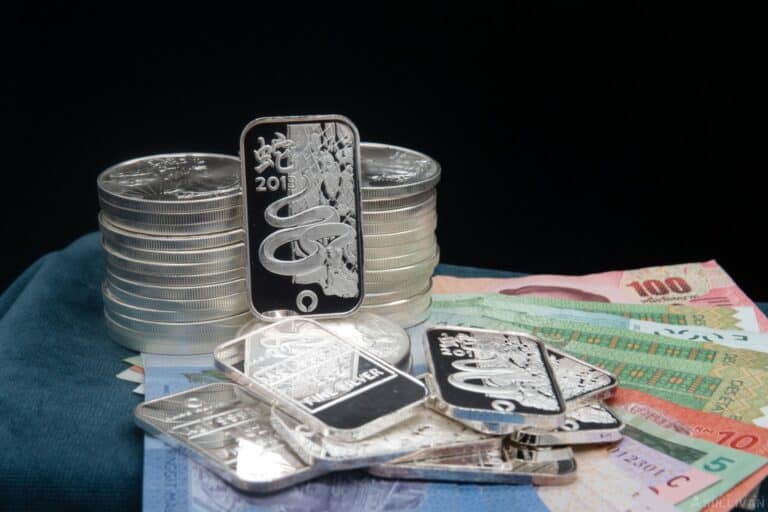
Precious Metals: The Best Hedge Against a Currency Collapse?
Gold, silver, and other precious metals have long been a reliable hedge against inflation and the collapse of government-issued currency. That’s because these materials are universally valuable and have been throughout recorded history.
Keeping a stash of these metals means that, unless you’re truly facing the Apocalypse, you’ll be able to exchange them for the things you need. The trick is doing it in a convenient and safe way.
For instance, a single gold coin can be worth thousands of dollars. A silver coin can be worth dozens. They just aren’t convenient for small purchases, assuming the person you are dealing with knows the value, can confirm it, and will trust you.
That’s the other part of the problem: once you start handing out precious metal, especially gold, that will attract attention, and it won’t be long before it’s the wrong kind of attention. This stuff makes you a high priority for robbery.
If you want to make precious metals a part of your financial collapse preparation strategy, a good idea is to get both gold and silver and in coins or ingots of different weights so you can better manage your purchasing power.
And don’t forget: a quantity of gold greasing the right palm can get you a favor when nothing else can.
Finding Work
Job insecurity will be, for many, the most pressing crisis during a financial collapse. And losing your job is one thing, but finding another one is something entirely different under the circumstances when viable jobs are drying up seemingly overnight.
Nonetheless, unless you are truly self-sufficient for the duration and all the way as described above, you’ll have to keep working, no matter what it is.
You can increase your chances of finding a good job by focusing on genuinely essential skills. Trades in electricity, plumbing, technical work focusing on repair, farming, and even security will likely be in high demand.
If you can offer these services to your community where you live, and people already know and trust you, you’ll have a much better chance of landing on your feet.
You can greatly improve your chances of finding meaningful employment in a hurry during a financial collapse by extensively networking now, while you can and while it’s easy.
Start reaching out and reconnecting with family members, friends, acquaintances, and former coworkers. See where they are and what they are doing, and actually keep in touch with them.
Lastly, don’t forget that being compensated with something other than money might be just as good under the circumstances: room and board, food, and running water for you and your family might quite literally be priceless.
Identifying Opportunities During the Collapse
No matter how dire things get, there are always opportunities for people who are clever enough and tenacious enough to take advantage of them.
The best advice I can give anybody trying to weather such an economic storm is to look for every local problem that you can solve for institutions, businesses, agencies, and individuals.
If you can solve a problem for somebody, there is a way that you can gain from it and do so honorably.
Also, really stop and take stock of your own skills and resources when it comes to production: there’s probably something that you can make that other people want or need.
Maybe you’re a crafty gadgeteer and can refurbish automotive or machine parts to keep them running just a little bit longer.
That could be a lucrative source of income and a way to gain renown and positive esteem in a market where brand-new car parts are incredibly expensive if they are available at all.

Tom Marlowe practically grew up with a gun in his hand, and has held all kinds of jobs in the gun industry: range safety, sales, instruction and consulting, Tom has the experience to help civilian shooters figure out what will work best for them.
Trump will not save us.
The deficit will in time become a currency damaging problem.
T-bills will be suspended ‘temporarely’
Many nations underpin their ‘funny money’ with T-bills. Guess what happers to their funny curre,cy… gasoline on the fire.
China then cannot cash in mature T-bills, nor sell the imature ones on the bond market. They become desperate for everything they need and go hunting with armed forces.
Russia… blows up brides, craters roads, and turns the eastern border into a moonscape to impede Chineese advances- so they persue india instead, whish is now a breadbasket nation.
Canada just works to survive. Mexico becomes chaotic and unstable. while they do manufacture medications, quality control is terrible, and usually is the very wrong substance.
Venesuala prospers, selling petrochemicals and fuels, for goods they need; Brazil exchanges food for fuel.
USA becomes 1000 little melithia wars, with he US Army tossed in for extra chuckles.
The young grow up fast, and the old die faster.