
So much of wilderness survival in prepping circles revolves around sustainment, and with good reason. Ensuring that you have access to clean drinking water, adequate food for energy, and suitable shelter for staving off exposure is paramount to survival.
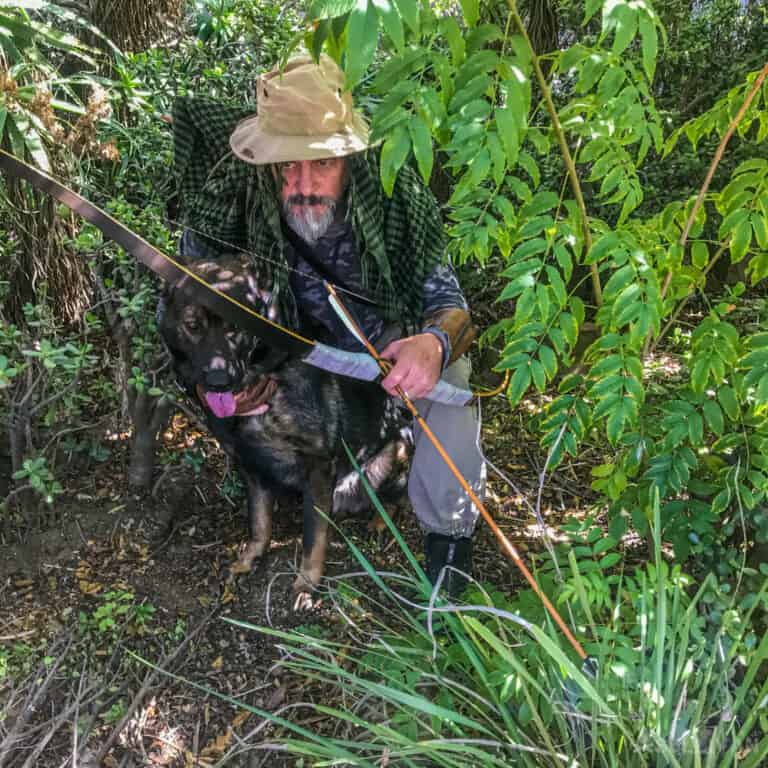
But as awful as it is to consider, your biggest threat while in the wilderness might come from other people. It might be desperate fellow survivors, marauding bands of raiders, or even ruthless government troops. Whatever the case, avoiding unknown contacts might be the most important factor in staying alive…
Most folks make themselves frighteningly easy to find or follow in the wild, but instituting the following tips as standard procedure can help you and yours stay completely hidden—and safe. We will get right into it below…
Minimize or Eliminate Signal Emissions
This is a big one, and it’s one that way too many otherwise savvy preppers forget about. Modern smart devices like cell phones, tablets, GPS systems, and more constantly emit radio signals—signals that can be used by technologically savvy adversaries for tracking you.
Most worryingly, depending on the device, they might even do this when they’re powered off. This is a problem that needs some technical know-how and, potentially, special equipment for mitigating.
If you’re using something like a handheld radio, unless you are actively transmitting, you probably don’t have anything to worry about. But for the other devices mentioned above, your best bet is to power down and pull the battery when you’re trying to stay hidden.
If that’s too much of a pain or if you don’t have one that’s easily removable (a factor that makes permanently installed batteries more suspicious in my eyes), you should stash the device in a Faraday bag that will completely block all outgoing and incoming signals.
Before you write this off as the stuff of spy thriller novels, consider that your average Wi-Fi signal can reach about a hundred yards outdoors.
If your device is transmitting or searching for a signal, other devices can interact with it and display that to a user. Using this as primitive proximity detection can help amateur adversaries get dangerously close to your actual location if they’re in the nearby area.
Make Use of Personal and Equipment Camouflage
This should be obvious to everyone who’s trying to stay hidden in the wild. Camouflage is a game changer when it comes to avoiding detection — as long as you do it right.
In fact, using the right colors, patterns, and materials can make you nearly invisible when you aren’t moving, even at close range!
The difference between bright colors and camo really is a night-and-day difference as far as detection is concerned. Why do you think authorities, gear manufacturers, regulatory bodies, and more all specify bright, vivid colors for signaling and rescue?
Assuming you want to hide, your clothing, packs, carried gear, and skin should all be covered in environmentally and seasonally appropriate camouflage.
This, as you might imagine, is a science, art form, and entire series of articles unto itself. But the short version is that you want dull, drab colors that will blend into the surrounding environment: greens and tans in the springtime, dark browns, yellows, and even dull reds in the fall, and white in the winter as long as the area is snowy.
When in doubt, go for a dull tan or brown color: most animals in nature are brown or tan for a reason.
You can do this with clothing, grease paint or other types of paint, tape, natural materials, and a whole lot more. If you suddenly have reason to hide your presence, you can always make use of natural materials for camo with a little ingenuity.
Use Camo Netting for Vehicles and Structures
Hiding larger objects like vehicles and structures with camouflage can be difficult or even impossible without adequate advance notice and specific materials. Luckily, you can use the same thing that the military uses for the purpose: camo netting.
Camo netting is lightweight, tough, and quite effective at long range. If folks are trying to spot you using optics or looking for you from the air, it can make enough of a difference to help you stay hidden, so don’t underestimate it.
Although a large net might be too big and bulky to warrant carrying in a bug-out bag, you can certainly make a great case for it being a standard item in any vehicle you keep packed for the purpose.
Hide Your Shelter
Whether you’re setting up a tent, bivvy, or hammock, or assembling a primitive shelter from natural materials, it always pays to put in extra work to hide it.
Your shelter is most likely to be noticed if you aren’t moving, and this is doubly true if you’re in any natural environment without a lot of cover, like trees.
Tents and the like can be concealed using the camouflage techniques described above, or you might cleverly hang a hammock between large shrubs or bushes, under an overhang on a cliff face, or somewhere else to keep it out of sight.
Consider taking shelter in a cave directly, or digging out a shallow pit for constructing a dugout or lean-to shelter and then camouflaging the top with branches and other gathered material.
Hiding your shelter isn’t that hard once you approach setup with concealment in mind, so start practicing now while you aren’t under pressure.
Avoid Leaving Signs of Passage
One of the worst possible things that could happen to you in a survival situation is being pursued by human adversaries that have actual tracking skillsets. Being followed is one thing, but being actually hunted is another!
But even if you’re being followed by amateurs lacking those skill sets, blundering through the woods or anywhere else leaving obvious signs of your passage can provide the equivalent of a neon sign for pursuers to follow.
Learning to avoid leaving signs of passage is critical in any case. This means boot prints in mud, sand, or snow, broken branches and disturbed foliage, rub marks on trunks or algae-covered rocks, and more.
This is a skillset unto itself, one that requires lots of practice and discipline to implement, but it’s something that you must do if you want to remain hidden. Worse, everyone in your group must be up to snuff, or else your efforts will be wasted!
Don’t Throw Out Trash!
Lightening your load is always great when it can be done responsibly, but you shouldn’t litter under the circumstances. Throwing out garbage—even leaving behind human waste—is just another type of intelligence that pursuers can use to track you down.
Even amateur trackers can learn a lot from what you leave behind, and something as innocuous as an energy bar wrapper might be a breakthrough in their efforts.
Don’t give them an easy win. When it comes to leaving waste behind, make sure you bury it and then carefully conceal the area where you dug.
Control Light Pollution
Everyone who’s ever served in the military, especially in a combat arms capacity, is already entirely acquainted with this tip. The human eye is naturally attracted to a few things, with light being the most attention-grabbing, especially in hours of darkness.
It’s difficult to overstate to those who haven’t been there just how dark it is out in the remote wilderness. In an area without tons of ambient light pollution, a modest flashlight might as well be an air raid searchlight.
An illuminated phone screen is a blazing beacon, and even dim night light sources like watch faces can be instantly detectable from a shocking distance.
You must take pains to discontinue or completely cover any light sources you need to make use of.
You must also be vigilant about innocuous actions and items that might betray you: glow-in-the-dark clothing or patches, the lighting of a cigarette or striking of a match, and things like that can give away your position just as easily.
Stay as Quiet as You Can
This is another tip that should go without saying, but it bears repeating: be as quiet as you can when you’re trying to avoid detection. Speak only in a hushed whisper and only when necessary. Silence clanking, jingling, or rattling gear…
Be doubly sure that all beeping alarms and indicators on electronics are silenced. Walk quietly, and avoid making noise by stepping on rocks, branches, leaves, and the like.
Don’t Skyline Yourself
Silhouetting yourself against the crest of a hill or against a smooth or clear contrasting background makes you stick out like a sore thumb.
This means that you need to be especially cautious when traveling in hilly areas to ensure you don’t walk along the ridge. Get up and over as quick as you can, and if you must travel along it, do so several feet from the top.
Similarly, when crossing cleared roads or trails that offer long sightlines, you should stay as low as possible to reduce your silhouette.
Eliminate Reflections and Shiny Surfaces
The glint of glass, metal, or even glossy plastic can easily draw attention to your position in the daytime, and it will stand out like a beacon at dawn or dusk.
This is another principle of concealment that members of the military have to learn the hard way, and you’d be wise to learn it the easy way before the fateful day comes: ruthlessly go over your gear and your clothing to remove or cover any shiny surfaces.
For things that are necessarily shiny, like optical lenses, consider the installation of a kill flash or an improvised anti-flash cover like pantyhose and a rubber band.
Stay Off and Away From Known Roads and Trails
People who are looking for other people, if they know what they are doing, will always look towards roads, trails, and other paths of easy ingress and egress.
Even something like a well-known game trail or logging road will be a magnet for pursuers or highwaymen looking to bushwhack easy marks.
If at all possible, do not travel by these routes, and stay far away from them whenever you can. If you do nothing else, this will make you a lot harder to find in the wild.
Don’t “Advertise” on Social Media
Another technological pitfall, and one that most of us have deliberately or inadvertently committed…
Running your mouth about bug-out routes, favorite camping spots, hunting locations, scenic overlooks, and more will provide valuable intelligence to anyone and everyone who might have reason to come looking for you.
All people are creatures of habit, and your pursuers will assume, often rightly, that you might be heading for a place you already know. The internet is indeed forever, but you’d be wise to delete any such posts you’ve already made and refrain from making similar ones in the future.

Tom Marlowe practically grew up with a gun in his hand, and has held all kinds of jobs in the gun industry: range safety, sales, instruction and consulting, Tom has the experience to help civilian shooters figure out what will work best for them.