
Knowing where to go and where to take shelter when disaster strikes will greatly improve your chances of survival. The biggest part of avoiding injury and death when disaster strikes is simply knowing where to get out of its way. Where you should go to get away or where you should head to take shelter might make the difference between life and death when the shit has well and truly hit the fan.
So, for example, your response to a flood should not be the same as to a tornado, and if you try to apply the evacuation plan for a tsunami to a riot, you’ll be putting yourself and your loved ones in danger.
When it’s time to run, you’ve really got to run and run to the right place. To help you make a correct and quick decision when seconds count, I’m bringing you a list of 47 places to take cover in various SHTF scenarios.
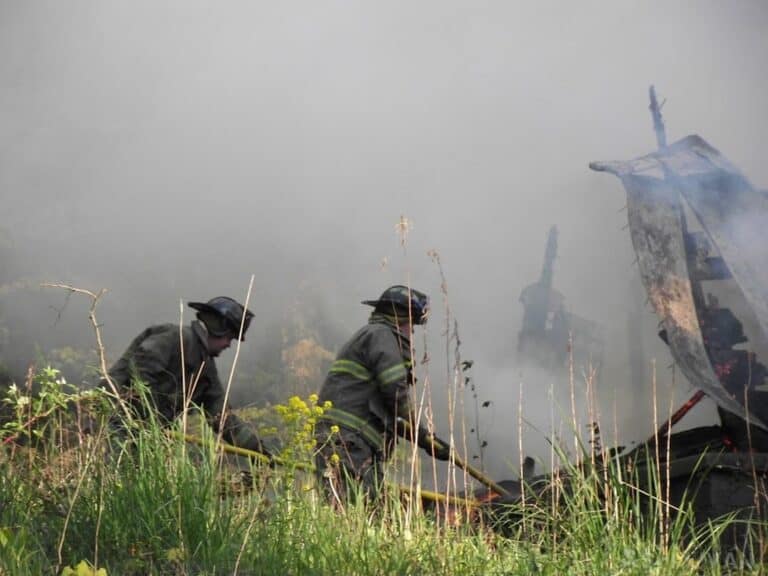
Wildfire
Wildfires are a substantial threat to life and property, and regrettably, are becoming more common all the time thanks to rising temperatures and the efforts of misguided eco-warriors who don’t want forests properly managed.
A severe wildfire can move far quicker than you might think and can obliterate entire towns despite the efforts of first responders.
Fire, of course, is incredibly deadly, and you have a few options for taking shelter against it; escape and avoidance are paramount.
- Known Firebreaks – If you’ve been monitoring a wildfire situation and there are areas that have been turned into dedicated fire breaks, this can be a good initial evacuation point. Firebreaks are areas that have been completely cleared of all vegetation and other flammable materials, and hopefully, they will stop the fire from spreading or crossing.
- Designated Evacuation Sites – Authorities will move quickly to identify the bounds and direction of travel of a large wildfire. Typically, they will issue designated evacuation sites for residents and towns and settlements that might be endangered by the fire. You are advised to head for these evacuation sites as quickly as possible if you live in a threatened location.
- Fire-Resistant Buildings – If your chances of escape are low or just too risky, try to find a fire-resistant building that is unlikely to ignite. Simple structures made from stone, concrete, brick, or other masonry are significantly more fire-resistant, but note that all other materials that make them can still readily burn.
- Lake or Pond – If you are truly desperate or if escape is cut off, grab a raft, canoe, boat, or even an inner tube and head out into the middle of a lake or large pond and wait for the fire to pass. Keeping yourself doused with water and away from all flammable materials should keep you alive.
Tornado
Tornadoes are among the most frightening and powerful high wind events on Earth. The largest and most powerful, classified EF5, can produce titanic winds in excess of 300 miles per hour. These winds can level most buildings and hurl train cars through the air like tissue boxes.
Likewise, these winds are strong enough to turn even the smallest and simplest objects into deadly projectiles.
Trying to dodge a tornado is a fool’s errand and likely to result in death or injury; if it doesn’t miss you, your best and only hope is to take shelter in the strongest structure available.
- Basement – When in doubt, head to the basement if a tornado warning is issued. Getting underground will give you considerable protection from flying debris, even as the structure above you is battered or even destroyed.
- Storm Shelter – A purpose-built storm shelter is the ideal location to run to when a tornado is near. Especially designed and hardened to resist wind, penetrating damage, and collapse, these can be installed in your basement, another room of your home, or even underground just outside your house.
- Innermost Ground Floor Room – Lacking a subterranean shelter, go to the innermost ground floor room of the building you are currently in. This will maximize, though not guarantee, your protection.
- Designated Tornado Shelter – If you are out and about in public or at your place of work, be on the lookout for designated tornado shelter placards on rooms or other nearby buildings. All of these publicly accessible places meet a certain construction factor to provide protection from even the strongest tornadoes.
Hurricane
Hurricanes are the largest and most damaging storms that can possibly occur. Major hurricanes themselves batter entire states, even entire regions of the country, with devastating winds, inundating storm surge, and biblical amounts of rain.
They also have a nasty tendency to spawn tornadoes the entire time, and the widespread damage they inflict makes them very, very difficult to prepare for.
You have a few options, but you’re strongly advised to act whenever a powerful hurricane threatens. The good news is that they provide lots of advance notice and move relatively slowly, meaning you will almost always have plenty of time to react and evacuate.
- Head Inland – Far and away, the best thing you can do to keep yourself safe when hurricanes approach is to get away from the coasts. Hurricanes are always at maximum strength prior to making landfall, and storm surge is one of their deadliest and most destructive elements. You aren’t out of the woods just because you head inland, but it will greatly improve your chances.
- Strong, Reinforced Buildings Out of Flood Zones – Just because you’re safe from storm surge doesn’t mean you’re safe from the hurricane. They produce high winds that can rival tornadoes or spawn tornadoes themselves, and so you’ve got to treat a hurricane the same as you would a tornado. Get inside a strong, reinforced building, and if you take shelter underground, make sure you have a plan for flooding if it does occur.
Earthquake
Scary and immensely destructive, earthquakes usually erupt with basically no warning. Aftershocks might be just as destructive as the quake itself and go on for days.
It’s hard to imagine taking shelter against something that can split the very ground and collapse buildings with ease, but it’s still possible.
Be aware of the following shelter locations, especially if you live or work in an earthquake-prone area.
- Under Sturdy Furniture – The very first thing you should do when you notice the ground start rumbling is get beneath the nearest sturdy piece of furniture. A table, a bed, anything. Falling debris is a major hazard, and that’s what we want to protect against.
- Wide-Open Outdoor Areas – If you are outside and able to move, get to a wide-open space away from buildings and overhead obstacles. Again, falling debris is a major killer. Once the shaking stops, move to the nearest wide-open outdoor space that you can.
- Quake-Resistant Buildings – Some larger buildings are constructed with a high degree of resistance to even powerful earthquakes. You usually won’t have time to get to one unless you’re already in one when an earthquake happens, but you can make your way there once the rattling and rolling stops.
Tsunami
Among the most cataclysmically destructive and deadly disasters on Earth are tsunamis. Caused by undersea earthquakes or other geological events, the result is a colossal mass of water surging towards land at high speed.
This mass of water can strike with incalculable force and reach up to 1 mile inland, sweeping people, cars, and everything else aside, knocking down buildings, and causing tremendous flooding.
You may or may not have much advance notice of a tsunami, so thinking quickly and heading for the best and surest shelter location is essential to survive.
- Head Inland – If detected, you might have 30 minutes to an hour before a tsunami arrives. Use this time to get as far away from the shore as you can. Do not stop!
- High Ground – If time is short or you have advantageous local terrain, head upward. The higher you can get over sea level, the better your chances of survival. Tall hills and mountains are ideal.
- Upper Floors of Strong Buildings – Big, strong buildings can resist even the colossal force of a tsunami. If you can get inside these buildings and head to the upper floors, you can avoid death.
- Designated Tsunami Evacuation Points – Tsunami-prone areas, particularly those around the Pacific Rim, are very used to dealing with these disasters and will have designated evacuation routes and safe zones marked or indicated on maps. Always be aware of the closest ones to you and go there at once if a tsunami warning is issued.
Pandemic
We all know how scary a pandemic can be, but these outbreaks have always happened and will always happen. Worryingly, historical pandemics have been much, much worse than Covid.
It’s difficult to think of protecting yourself from invisible germs that you cannot see as taking shelter, but picking the right spot to lay low and wait things out can still greatly improve your chances.
- Lockdown at Home – If your home is well stocked with everything you need to survive and go on living, stay home and lock down. Avoid contact with other people and institute sanitation and quarantine protocols for your family.
- Sparsely Populated Areas – More people mean more infection vectors. If you have any choice, head to an area with a lower population.
- Secured, Self-Contained Shelter – For a lucky few, access to a completely secured, sealed, and totally self-contained survival shelter or bunker is a possibility. If the pandemic is truly apocalyptic, it might be time to head inside and shut the door behind you.
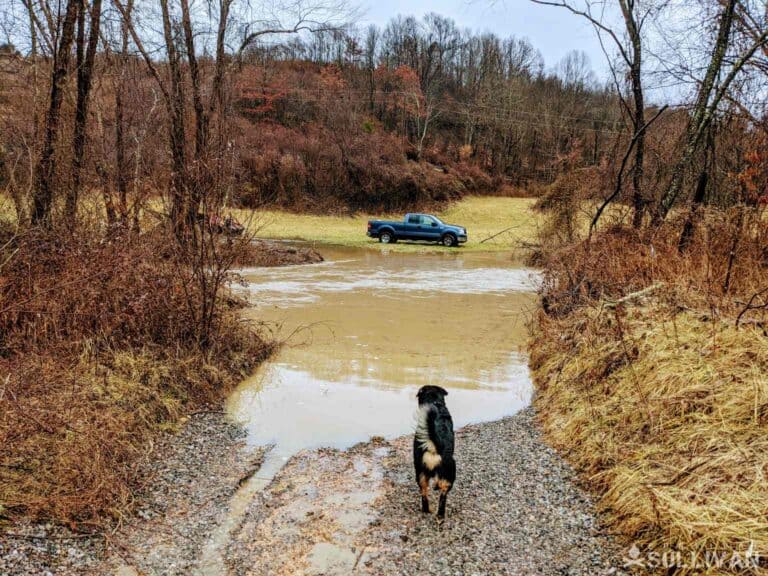
Flood
Floods are one of the most common, most destructive, and deadliest disasters that occur globally year to year. Floods can occur almost anywhere, especially in places that get lots of precipitation or have nearby rivers.
You might have notice of likely flooding, in the case of a real flooding that results from sustained rainfall, or you might have very little notice in the case of flash flooding.
Never try to cross flood waters if you can avoid it, especially moving water, but go to the following locations if possible to improve your survival chances.
- High Ground – When the water is rising, you need to head up. Staying out of the water is paramount for your survival, not the least of which because water can ruin your supplies and conceal many dangers on its own. Low-lying areas are to be avoided at all times.
- Upper Floors of Sturdy Buildings – If it’s too late to escape from the flood waters, head to the upper floors of a sturdy building. This will make it easier for rescuers to find you while keeping you more comfortable and safe. Note that you should never head into an attic space or other fully enclosed upper area in a building; rising water could trap you there.
- Out of Affected Area – If you live in a flood-prone area and know that serious flooding is likely or guaranteed to occur, get out while the getting is good. It might be tempting to wait and see and avoid a costly and annoying evacuation, but fleeing the area while you can still do so safely and under control is always the best approach.
Landslide / Avalanche
Although highly localized, landslides and avalanches strike with very little warning or time to react and historically are extremely destructive and deadly.
If you hear or see one coming, or if warning sirens are sounded, you might have only a couple of minutes if you are lucky. Act quickly!
- Away from Slopes – Try to determine where the avalanche is coming from or could come from, then get out of the path and off the slopes.
- Ridges and Other Raised Areas – Low-lying areas, valleys, runnels, and similar terrain features are just as bad, serving to channel masses of falling soil, snow, water, and other debris into a devastating mass that can tear you apart.
- Flat, Open Spaces – Wide-open, flat spaces that are far from the hills and mountains are your best bet. Debris that is forced to move horizontally and outward instead of downward will not benefit from gravity and will lose momentum.
Riot
Sadly, an increasingly common occurrence as America enters a new age of domestic strife, sometimes your fellow man can be the most dangerous disaster of all.
Massive mobs of bloodthirsty, destructive people can destroy entire cities and hurt or kill victims over a wide area and with little chance of retaliation or stopping them until they burn themselves out. You must treat a riot with deadly seriousness.
- Away from Area of Activity – If you have warning, opportunity, and a sure path of movement, get well away from the main area of the riot with all haste. The more distance you can put between yourself and the rioters, or the target of their ire, the greater your chance of survival. Think twice before you decide to stay put and protect property…
- Head Out of Urban Areas – Although we can’t say for sure that a riot will only affect urban areas, urban areas are far and away the most common locations for these mob outbursts. If civil unrest is simmering, get away from the cities.
- Go to Areas with Police Protection – By luck or by design, rioters can be blocked off from certain areas by the presence of police, though this is always subject to change as the situation evolves. If you need safety in a hurry, get to these protected areas and plan your next move quickly.
- Hide in a Building with Multiple Exits – Sometimes you might risk more trying to move through a mob. If you want to shelter in place, find a sturdy building that’s easily defensible, keep the lights out, stay quiet and don’t attract attention but always have at least one additional exit that you can take in case the building is set on fire.
Terror Attack
Among the most sudden and vicious man-made crises, terror attacks take many forms and have many causes, but they’re invariably targeted against massive groups of defenseless civilians.
Knowing this and a little bit about terrorist SOP, you can figure out which way to run…
- Away from Crowds – Keeping away from crowds is hugely important to avoid becoming a casualty yourself. Large clumps of people always draw violent action, be it from a gun, bomb, or vehicle. Worse, sophisticated terrorists will herd civilians into a predefined kill zone using an initial attack. Whatever happens, you need to escape but do so while moving away from the mass of other people.
- Heavily Constructed Buildings or Rooms – When bullets, bombs, and shrapnel are flying, you must put something heavy between you and the projectiles, and that means you need cover. Head into the nearest accessible building or room constructed of heavy brick, concrete, steel, or other materials. Make sure it’s defensible, and you can close off the space against intruders if possible.
Chemical Spill / Release
Whether it is an industrial accident or a deliberate chemical attack, this is another frightening and insidious situation to cope with.
Depending on the nature of the event, you might have enough information to help you make a good decision, or you might not. If you lack intel, don’t risk exposure by leaving a shelter.
- Get Upwind and Uphill from Incident Site if Time Permits – If you know where the incident has taken place and you have some time before the chemical agent reaches you on the water or on the wind, try to get upwind and uphill from it if you can do so safely and with certainty. This will reduce your overall exposure as time goes on.
- Shelter in Closed Building, Seal All Gaps – Lacking good information or when time is short, simply shelter inside any structure that you can seal up. Inside a residential home, turn off the HVAC, tape up all windows and doors, close flues, vents, and louvers, and do everything else you can to keep air or water from getting in.
Nuclear Accident
A horrifying incident but one that is, statistically, unlikely to kill you, you must nonetheless take shelter as quickly as possible if a nuclear accident happens. This might be a nuclear reactor meltdown or some other destructive incident, or it might be the spill or loss of nuclear fuel.
As soon as you can, go to one of the following locations.
- Designated Fallout Shelter – One of the most dangerous and sinister risk factors associated with a nuclear incident is clouds of fine, irradiated material – fallout. Though it decays quickly, it is extremely dangerous if you are close to it or if it is in contact with you. Designated fallout shelters will protect you from it.
- Underground – Lacking a purpose-built fallout shelter, get underground. Head to a basement, dugout, bunker, cave, mineshaft, or anywhere else that will put large quantities of soil between you and the fallout.
- Large, Tall Buildings with Thick Walls – Large, heavily built buildings are another good choice because they provide maximum standoff between you and the fallout that comes to rest on the roof and walls. Go to the innermost lowest room that you can reach.
Nuclear Strike
The number one nightmare scenario of preppers and every sane human. A single nuclear strike or a full-blown nuclear exchange will be nothing short of apocalyptic.
With a little luck, it’s possible to survive if you can get to a proper shelter, but I warn you that the closer you are to ground zero, the lower your chances are of survival.
- If Time Permits, Get as Far from Target Area as Possible – Major population centers, military bases, industrial hubs, and other strategic areas are priority targets for nuclear weapons. If at all possible, get as far away from all of them as you can.
- Caves – Substantial caves that go deeply underground can provide excellent protection from a nuclear blast and from fallout.
- Tunnels – Similarly, large tunnels that go through mountains or good-sized hills may provide a degree of protection from a nuclear blast if far enough away.
- Basements – If you are at home and a nuclear blast is imminent, head to the basement and pray.
- Nuclear Bunkers – If you are very, very fortunate and have access to a dedicated nuclear-rated bunker, now is definitely the time to get inside.
- If Outside Blast Radius, Enter Designated Fallout Shelter – If you are well outside the blast radius of the nuclear device, you must still take cover against fallout, which could be approaching in massive quantities. Enter the nearest designated fallout shelter.
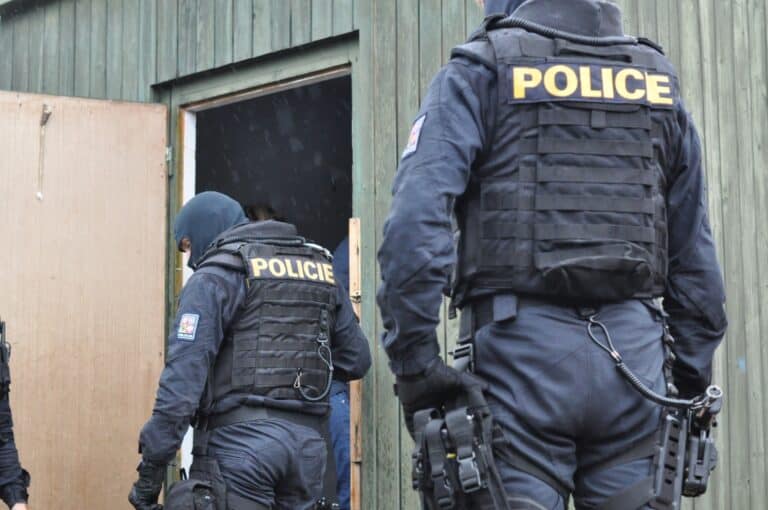
Martial Law
An increasingly plausible scenario that American preppers might be facing is that of martial law.
However you feel about the military, life is going to change and not in a good way if martial law is declared. It’s all too easy for good and innocent people to get mashed up in the gears of the military apparatus, and so you should shelter accordingly…
- Rural or Small Suburban Towns – The military doesn’t have limitless hardware or manpower, and so cannot be everywhere at once, especially in a country as big as the US. Small rural and suburban towns are far less likely to experience immediate occupation or ongoing patrols.
- Areas that are Politically, Economically, and Strategically Unimportant – The military will certainly be deployed to protect areas of political, economic, industrial, and other strategic interest or importance. You want to go anywhere that is the opposite of that!
- A Self-Sufficient Homestead – Sometimes it’s best to just head out to your little patch and just wait for the whole thing to blow over. A quiet country homestead in a rural corner of America might not experience what the more populous areas will during martial law.

Tom Marlowe practically grew up with a gun in his hand, and has held all kinds of jobs in the gun industry: range safety, sales, instruction and consulting, Tom has the experience to help civilian shooters figure out what will work best for them.