
Whether you are running a wood stove inside, a fire pit in the backyard, or you are huddled around a campfire somewhere on the back 40, knowing what to burn and how to burn it is important for safety and efficiency.
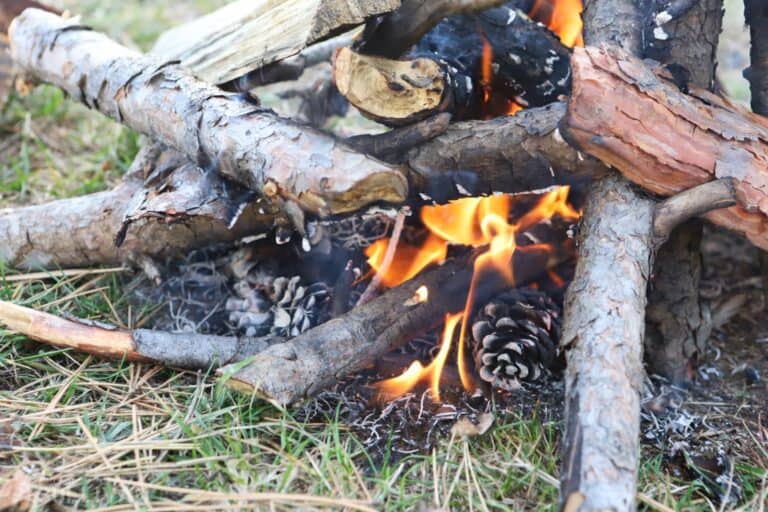
It goes without saying you’ll be burning wood (including pine wood), but lots of folks burn other stuff besides, like leaves, grass clippings, pine needles, and more. Take pine cones, for instance. I’ve got childhood memories of pitching a few into the fire with my grandpa, and I can vividly remember how it made the fire leap and spark…
You might want to burn a few yourself for various reasons, but you need to know what to do. I’ll tell you all about burning pine cones in this article.
Why Burn Pine Cones in the First Place?
A good question. There are several good answers aside from the obvious, which is “because they can.”
Pine cones are a remarkably good fuel source. They catch fire readily and burn very hot, so if you need some kindling, throw out some extra heat, or make the most of easily gathered fuel, pine cones can do it.
Not for nothing, burning pine cones is fun and cheery. They make the fire leap and crackle, they smell great, and they are the perfect traditional item to add to the fire at gatherings and get-togethers.
You’ll have to take care, though, as you will learn because they do have some drawbacks…
Pine Cones Usually Burn Up Quickly
Something I want you to consider upfront because it could be important if you rely on wood heat as your primary source of warmth.
Pine cones don’t last long at all. They aren’t particularly dense, they are full of highly flammable resin and sap, and they will burn to ashes in very little time. You might be sitting on a small mountain of pine cones, but that really isn’t as much fuel as you might think.
Except in truly dire situations, pine cones should only be a supplemental or incidental source of fuel whether indoors or out.
Caution: They Are Smoky and Often Spit Sparks
Here’s the big problem with burning pine cones, particularly indoors. Pine cones are invariably highly smoky and sparky. Outside, assuming you don’t have to sit too close to the fire, this can just be a minor annoyance. But inside, it is downright troubling.
All the extra smoke comes from the volatile compounds that pine cones are full of, namely sap and resin. This creates thick smoke, which will turn into buildup inside your chimney, exhaust pipes, and flues.
Hot globs of sap can burn you or other family members and, potentially, start a fire. Pine cones are also pretty notorious for launching hot embers when they pop, and that can be a similar hazard.
In short, you just need to be smart before you toss them on the fire. Never put a bunch on the fire at once, or else you’ll have a raging, hissing, and difficult-to-control blaze. Consider using a cage or screen around your fire, if possible, to contain potential projectiles and sparks.
Burn Sparingly, if at All, in Wood Stoves and Fireplaces
I’ll admit that my grandparents burned pine cones pretty regularly in their fireplace and in the wood stove my granddad had in his shop. They loved the aroma, and it was just a fun thing they’d do every year. Today, though, I know they were taking unnecessary risks.
That buildup I mentioned in the previous section can be a huge problem. Creosote, as it’s called, is highly flammable and greatly increases the likelihood of a devastating chimney or exhaust fire. That can easily end up burning your whole house down.
Talk to any professional chimney sweep or wood stove installer, and they will confirm this: you always want to minimize the burning of resinous fuel for exactly that reason, and pine cones are near the top of the no-no list.
One or two every once in a while, just for ambiance, is okay, but you’ll still have to protect against sparks and hot sap as described above. Think it through before you toss one into your stove.
Pine Cones Are Great Firestarters When Seasoned and Dry
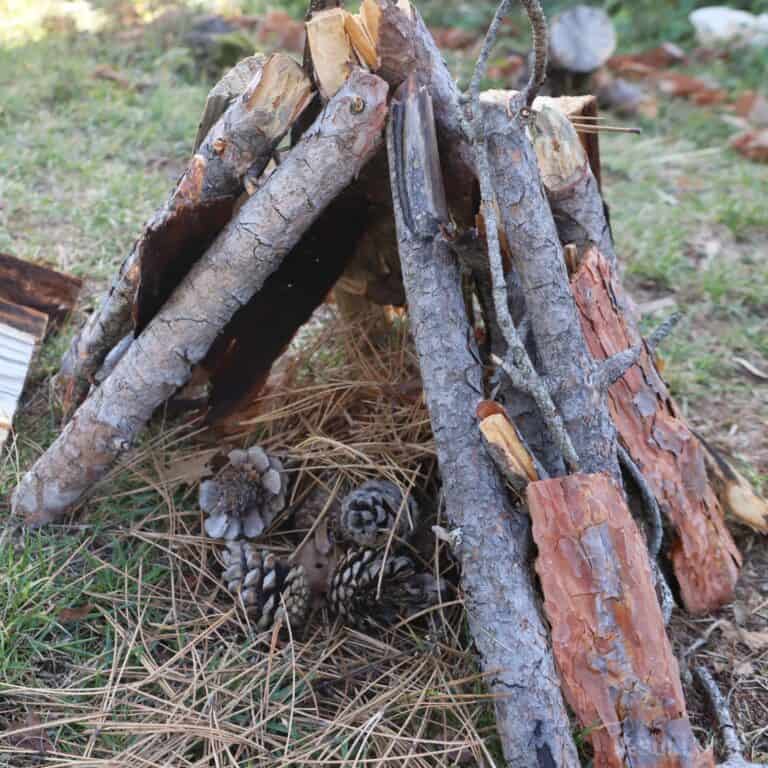
One thing you can always use pine cones for is as firestarters, either as tinder or kindling to get even larger fuel going reliably.
For smaller fires, you can snap off a few of the “petals” and light those, or light up the cone itself before placing it on a nest of soft tinder at the base of larger sticks.
As mentioned, they will go up quickly, and they burn intensely for a short time, which especially recommends them for starting stubborn or damp fuel.
Wax-Dipped Pine Cones Work Even Better
If you live in a wet region like the Pacific Northwest, you may want to keep some homemade firestarters handy for survival purposes or just for better performance. You can dip your pine cones in candle wax to make them perform even better.
It also helps them resist moisture so they are ready to light at all times, and they look downright festive. I like to whip up a batch every winter and use some as decorations, responsibly, of course, and give the rest away as gifts.
There are two options for making these, both of them pretty easy.
Method 1: Dip – for Larger Pine Cones
Use or make a double boiler and get yourself some candle wax. You don’t need to spend big for this project, as old, half-burned candles work just perfectly. Gently heat the wax until it is just soft and melted.
Then grab any dry, well-seasoned pine cone and roll it through the wax until the ends of all the petals are coated. Use your fingers if you’re careful or tongs if you are afraid the wax is too hot.
Set it aside to cool and move on to the next pine cone. You’ll need to repeat this process with each pine cone between two and four times to build up a sufficient coating of wax. Once you are happy with them, they are ready to set out or use!
Check out how to do it here.
Method 2: Pour – for Smaller Pine Cones
If you’ve gathered a bunch of smaller cones, let’s say about the size of a chicken egg, you can use melted wax and a ladle along with a paper egg carton to make portable, highly effective firestarters.
Simply load the pine cones into the individual cells of the egg carton, narrow end down toward the ground. Melt your wax in a pan or double boiler, then very carefully pour it over the pine cones until it is about halfway up the cell in the egg carton. Don’t go any further, or it can overflow!
In case you didn’t guess already, it’s smart to protect the surface you’re working on if you aren’t doing this outside! Leave the pine cones to cool completely, and then you can gently pop them out. Ready to go!
Check out the full instructions here.
Beware of Bugs If Gathering and Storing Cones
One last tip for me because I had to learn this lesson the hard way. It’s easy to get carried away collecting pine cones when they are all over the place, but if you’re going to bring them home and store them for later use or for coating with wax, you should check them for bugs.
All kinds of creepy crawlies, including ants, spiders, and more, love to hang out in the shelter that pine cones provide. Giving them a thorough shake while wearing gloves will help to convince these bugs to relocate.
I know a few folks who go as far as gently heating the cones on a baking sheet in an oven set to about 150°F / 65ºC to kill bugs and germs, but that makes me a bit anxious about a potential accidental fire.
If you don’t want to go through all that, just store them in a dry, out-of-the-way place where any stowaways won’t cause trouble.

Tom Marlowe practically grew up with a gun in his hand, and has held all kinds of jobs in the gun industry: range safety, sales, instruction and consulting, Tom has the experience to help civilian shooters figure out what will work best for them.