
Tomato sauce is the basis of many different condiments, pasta sauces and other recipes. It’s something you should always have on hand no matter what your favorite dishes are. It’s also the perfect thing you can make and can yourself at home; homemade tomato sauce is light years better than anything you’ll get at the grocery store!
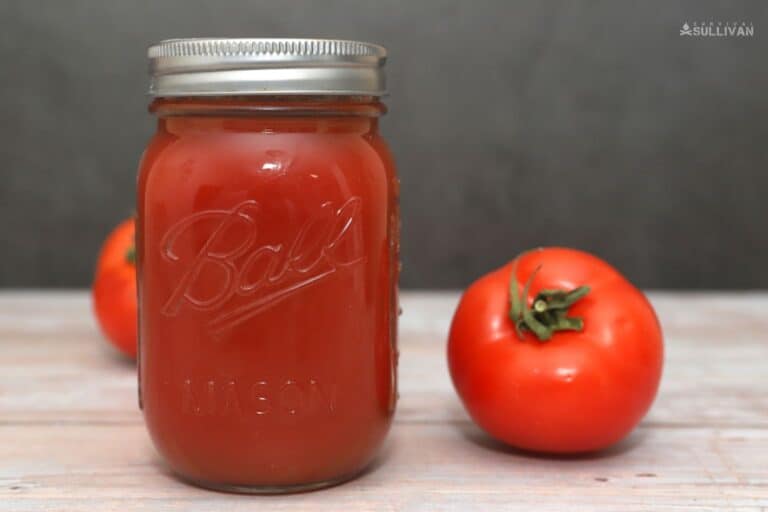
It’s also simple to make, and something you can make in a water bath or pressure canner. Some effort is involved, and a fair bit of time, but it’s easy when you have a good guide.
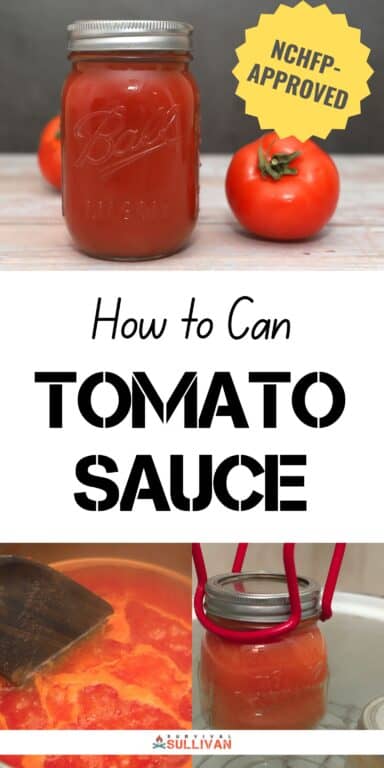
Below I’ll share with you step by step instructions approved by the national center for home food preservation (you can find their instructions here, FIY), one of the most respected canning authorities in the land – along with step by step photos of the whole process. Set up your canner, clear your counter and we will get down to business. The photos show the process in a water bath, though you will find instructions for a pressure canner, too.
Step 1: wash tomatoes. By hand or with a colander, give all of your tomatoes a good rinse and wipe. If you are using produce wash, make sure to give them a final rinse in cool, clear water.
You don’t need to dry them if you’re getting started immediately but if you’ll be delayed for even a little while, dry them carefully with a clean cloth or paper towels.
Step 2: remove foliage and stems, inspect for bruises or defects. Pay attention and go over each tomato individually, removing all stems and foliage and looking for any damage or defects. Any that aren’t perfect, set them aside.
Step 3: cut away bruises, dark spots and green spots. Assuming the tomato isn’t squishy and ruined, you can cut away small patches of broken skin, discoloration or green spots. You don’t want any of the above going into your tomato sauce!
Any of your tomatoes that are moldy, have a rank odor or just seem suspect, throw away. It’s not worth the risk!
Step 4: slice tomatoes into quarters 1 pound at a time, add to large saucepan. Working briskly to prevent your juice from separating, slice about a pound of tomatoes at a time into quarters and place the pieces directly into your pot or saucepan. chopped tomatoes in saucepan
Step 5: turn up heat, crush tomatoes. Using your masher or a similar tool crush and squash the tomato quarters you added to the saucepan. Raise the heat to boiling, and then go back to the rest of the tomatoes.
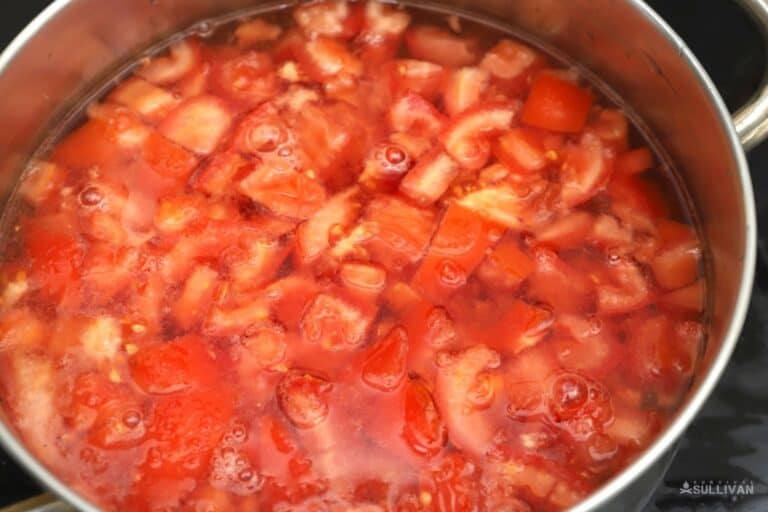
Step 6: keep slicing and adding tomato pieces to boiling juice. Keep going, slicing about a pound of tomatoes at a time into quarters then add them to the juice mixture and crush them. Note that the liquid must remain at a boil the entire time for safety! Don’t add too many at once or else you will drop the temperature below boiling. Repeat this process until all of the tomatoes are sliced and in the pot.
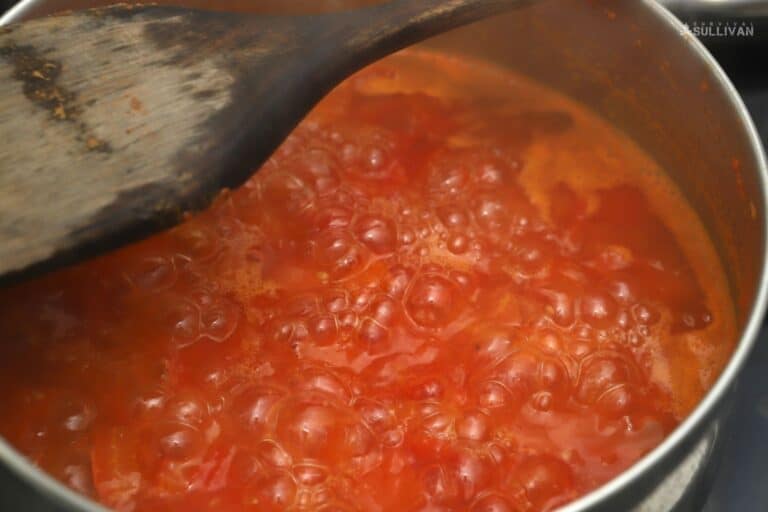
Step 7: simmer mixture for 5 minutes. Once you’ve added all of the tomato pieces and crushed them, turn down the heat a little bit to simmer the mixture. Let it simmer for 5 minutes. simmering crushed tomatoes
Step 8: strain tomato mixture. Being careful to avoid getting burned, press the tomato mixture through your sieve or food mill to remove all of the skins and seeds. It should look like this:
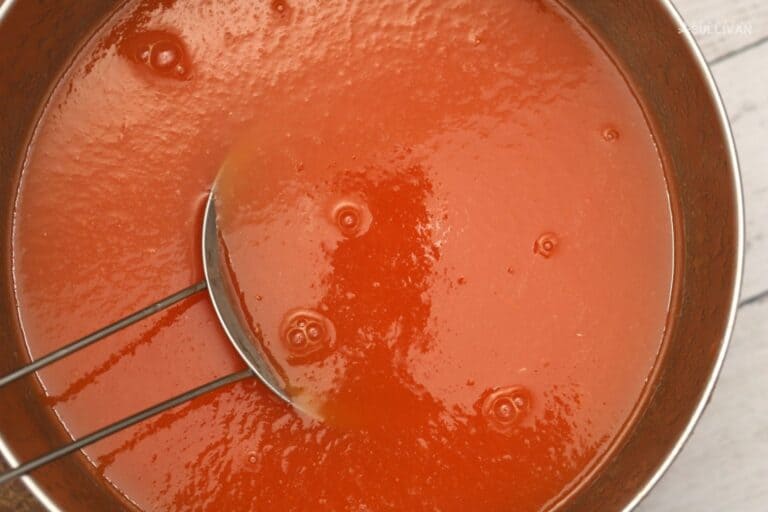
Catch the juice in a different, clean saucepan or a large mixing bowl. You’ll transfer it back to the original saucepan for reheating in the next step, or you can heat it again in the new saucepan.
Step 9: simmer juice until desired thickness is reached. This next step will take a while so settle in for a long wait.
Put your juice back on the heat and bring it to a simmer, leaving it to simmer and stirring occasionally until the volume has reduced by about a third for a thinner tomato sauce or by half if you prefer thicker sauce.
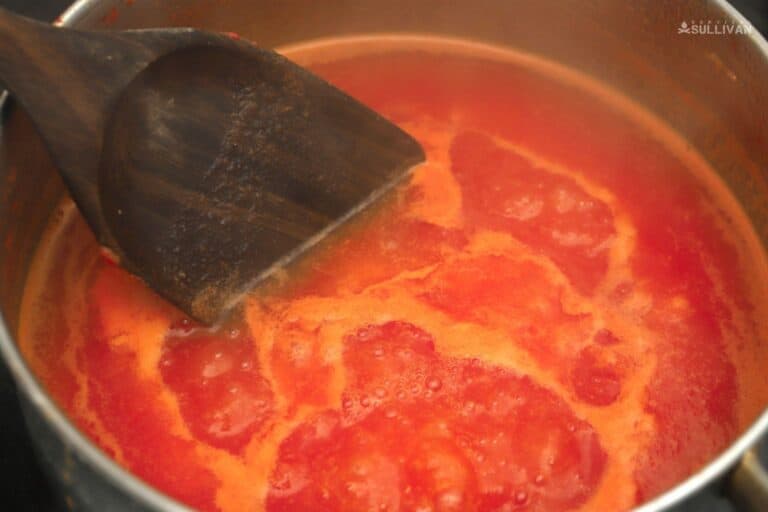
Whatever you prefer, you only want to simmer the juice now, not hard boil it!
Step 10: preheat jars when sauce is almost ready. When you notice the sauce starting to get close to the desired consistency, preheat your canning jars. You can do this in the canner according to the instructions that came with your unit or in a separate pot of water.
Step 11: leave sauce at simmer, place hot jars on cutting board or folded towel. When the sauce is ready, use jar tongs to carefully position your preheated jars for filling. Place them on a plastic or wood cutting board or a folded kitchen towel to protect your countertop.
Step 12: add lemon juice or citric acid and salt to jars. You must add an acidifying agent to each of your jars prior to filling. If you’re using lemon juice, put one tablespoon in each pint jar or two tablespoons in each quart jar. If using citric acid, place ¼ teaspoon in a pint jar or a ½ teaspoon in a quart jar.
Salt is optional, but you can add up to a half teaspoon to a pint jar or one whole teaspoon to a quart jar.
Step 13: fill jars with canning funnel and ladle. Working quickly but carefully, use a ladle and canning funnel to fill each jars, leaving ¼ quarter inch of head space at the top. ladling tomato sauce into canning jar
Step 14: cap jars. Moving briskly on, place a lid on each jar and secure each with a band. Tighten the bands down finger tight, but do not overtighten them! capping jar
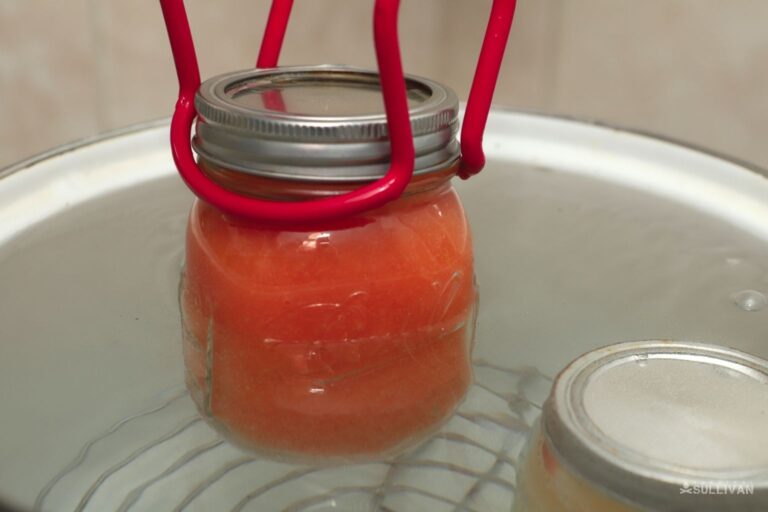
Step 15: load jars into canner and process. Load the jars one by one or on the rack back into the canner, taking great care to keep them perfectly upright and level. Do not tilt the jars or allow the sauce inside to slosh against the lids; that can result in a seal failure later.
Once all of the jars are in the canner, turn up the heat to full and process according to the instructions below based on your elevation and type of canner:
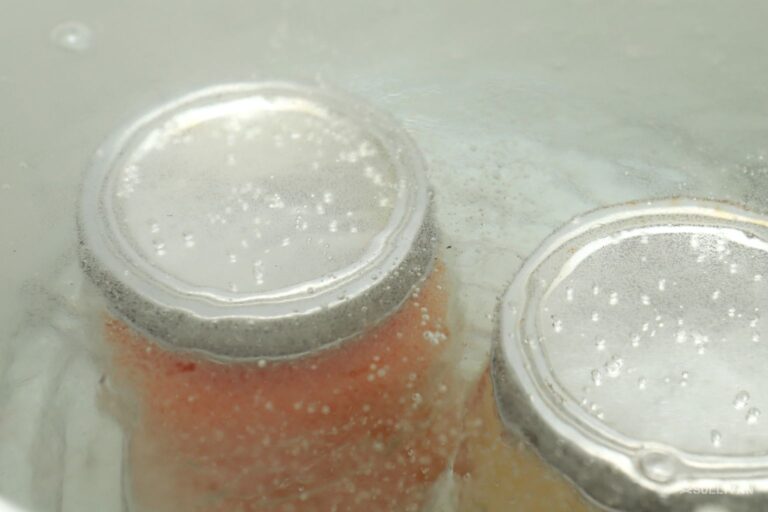
Water Bath Canner
For pint jars, process for 35 minutes if you’re between sea level and 1,000 ft in elevation, 40 minutes if you’re between 1,001 and 3,000 ft in elevation, 45 minutes if you’re between 3,001 and 6000 ft in elevation, and 50 minutes if you are above 6,000 ft in elevation. Add 5 minutes to any given interval for quart jars!
Pressure Canner, Dial Gauge
Process for 15 minutes at the following prescribed pressure.
Pint Jars: set at 6 PSI if you’re between sea level and 2000 ft in elevation, 7 PSI if you’re between 2001 and 4,000 ft in elevation, 8 PSI if you’re between 4,001 and 6,000 ft in elevation, and 9 PSI if you’re between 6,001 and 8,000 ft in elevation.
Quart Jars: set at 11 PSI if you are at sea level or up to 2,000 ft in elevation, 12 PSI if you are between 2001 and 4,000 ft, 13 PSI if you’re between 4001 and 6,000 ft, and 14 PSI if you’re between 6,001 and 8,000 ft.
Pressure Canner, Weighted Gauge
Process for 15 minutes at the following prescribed pressure.
Pint jars: process at 10 psi if you’re between sea level and 1,000 ft in elevation, or 15 psi if you are above 1,000 ft in elevation.
Quart jars: process at 15 psi if you are between sea level and 1,000 ft in elevation. Note: it is not recommended you process tomato sauce in a weighted gauge pressure canner above 1,000 ft in elevation.
Step 16: rest jars when processing is complete. After the processing time has elapsed, cut the heat to the canner but do not remove the jars. Leave them in the canner to rest. If you are using a pressure canner, cool and alleviate pressure for your model according to the instructions that came with your unit.
Step 17: carefully remove jars, set aside to cool. Being cautious to keep the jars perfectly upright as before, remove them from the canner and set them aside on your counter, using a clean cutting board or folded towels to protect the surface.
Cooling will take anywhere from 12 to 24 hours, and hearing popping is normal during this time. IMG_8947
Step 18: check lids. Once the jars have cooled down completely, it’s time to test the lids. Unscrew the band from each jar and then carefully, then press on the middle of the lid with a fingertip. It should not flex, pop or move, and you should not hear a hiss or any bubbling.
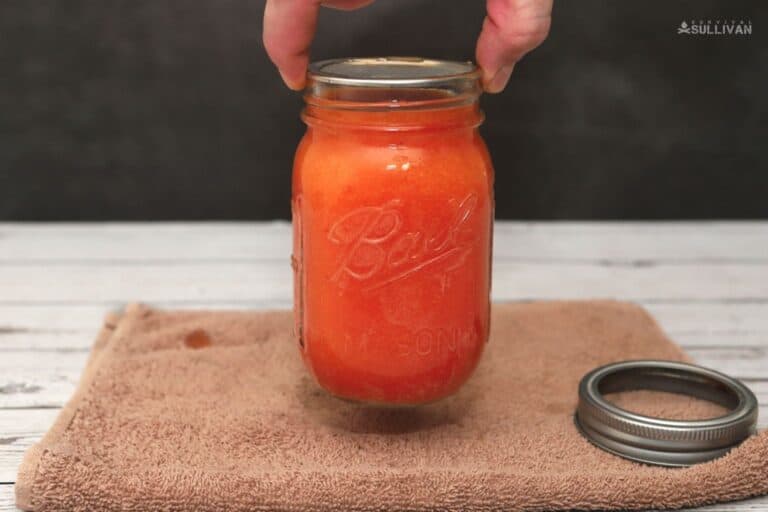
If the jars pass that test go to phase 2, holding the lid just by the edges with your fingertips, lift the jar straight up off the counter about an inch. Again, you should not detect any movement or hear any sound. If all of the jars pass these tests, they are ready to store.
Step 19: store jars. Wipe off each jar with a clean, dry cloth or paper towel then store them in a cool, dark place that is protected from temperature fluctuations.
Step 20: done! That’s it. Your sauce will last at least a year in storage.
What to Do If a Lid Fails?
You have a choice to make if a lid doesn’t seal properly, but don’t throw the contents away: it is still good and safe for the moment. ..
The first option is to open the jar and use the contents, or stash it in the refrigerator for use within a week. You can use it for anything that you would normally use tomato sauce for. The other things you can do is to pour the sauce into a fresh jar and, using a fresh lid, process it again.
But, assuming the jar passes the next lid test when processing is complete it is good to go and ready to store as usual.
What you can’t do is it just tighten the lid down and store the jar hoping for the best; it won’t make it and will definitely spoil!


My dad was military. My grandfather was a cop. They served their country well. But I don’t like taking orders. I’m taking matters into my own hands so I’m not just preparing, I’m going to a friggin’ war to provide you the best of the best survival and preparedness content out there.
is there any info on ”steam canners”
we picked one up a few years ago and haven’t
tried tomatoes yet.
we have the other canners to use but like working
with the steam canner [we are below 1000 feet]