
One of the very best things you can do to improve your prospects in any long-term survival situation is to become more self-sufficient. When it comes to self-sufficiency, producing your own food is critically important. It’s really the only way you can be sure—or as sure as you can be—that you and yours will have something on your plate when stomachs start rumbling.

For most of us, gardening is both highly accessible and sustainable, and there’s no reason you shouldn’t be growing a survival garden right now. But not all crops are created equal; some are a lot more nutritious, longer-storing, and more versatile than others.
Accordingly, if you aren’t gardening simply for fun or to pad your pantry during kinder times, you need to tailor your choices to provide maximum benefit for minimum work. Keep reading, and I’ll tell you about 10 survival foods that you can—and should—be growing yourself.

Corn
- Nutrients: Loads of carbs and fiber, good quantities of B vitamins like thiamine and folate. Also offers a little protein.
- Survival Perks: Excellent energy content, very long-lasting in storage when dried, multipurpose, easy to grow in the right conditions.
Corn is a mainstay crop eaten around the world, and it’s definitely one that deserves a place in your survival garden.
Boasting excellent caloric density, corn is easy to grow in most warm climates, and modern varieties only take two to three months to reach full maturity. A single stalk can produce one or two large ears and be grown quite densely.
Corn is also extremely long-lasting once it is dried; as long as you protect it from pests, it will last basically forever in an airtight food storage container.
Corn is also super versatile and can be eaten as is, processed into flour, or turned into animal feed. If you only grow one survival crop, you can make a great case for corn!
Buckwheat
- Nutrients: High in protein and fiber, good B vitamin content, contains manganese and magnesium.
- Survival Perks: Very easy to grow even in poor soil and subpar conditions, one of the best vegetarian protein sources, grows quickly, nearly as versatile as corn.
Buckwheat is a pseudo-cereal, so called because it isn’t actually a grain; instead, it’s a relative of rhubarb! In any case, buckwheat is used in most of the same ways that typical grains like corn and wheat are.
The individual “berries” can be cooked and eaten or processed into flour. Buckwheat is an excellent source of vegan protein and has a good assortment of other nutrients besides.
Comparing it as a survival crop generally, there’s a lot to like: it grows fast and readily even in poor soils and rough conditions, and it also has a lightning-quick growth cycle, typically being fully mature in just nine or 10 weeks.
This one might take a little getting used to before you can incorporate it into your menu, but it’s well worth the effort.
Beans
- Nutrients: Packed with protein, iron, folate, fiber, and carbs.
- Survival Perks: Extremely good source of protein, extremely long shelf life when dried and stored properly, most plants are nitrogen-fixing.
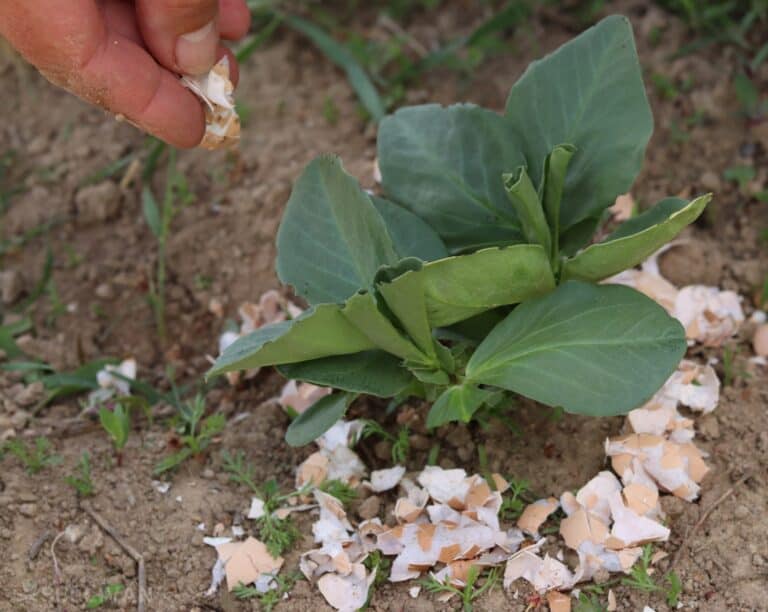
Beans and prepping go together like peanut butter and jelly. Okay, probably a poor analogy, but there’s no denying that beans are a mainstay preparedness food around the world for very good reason. They offer an excellent nutritional profile and are once again an extraordinarily good vegetarian protein source.
Beans, in all varieties, are also a nitrogen-fixing plant family, meaning they help to fortify your soils with nitrogen every planting cycle.
Beans are also quite versatile and easy to store: varieties like peas and green beans can be eaten right in their pods, or shelled, dried, and stored for ages with very little loss of quality.
Another great thing about beans is that there is a variety that will grow well no matter where you live. This makes them a mainstay in a survival garden.
Potatoes
- Nutrients: Lots of carbs, vitamin C, vitamin B6, and potassium.
- Survival Perks: High yield in relatively small space, very calorie-dense, months-long storage life if properly cured.
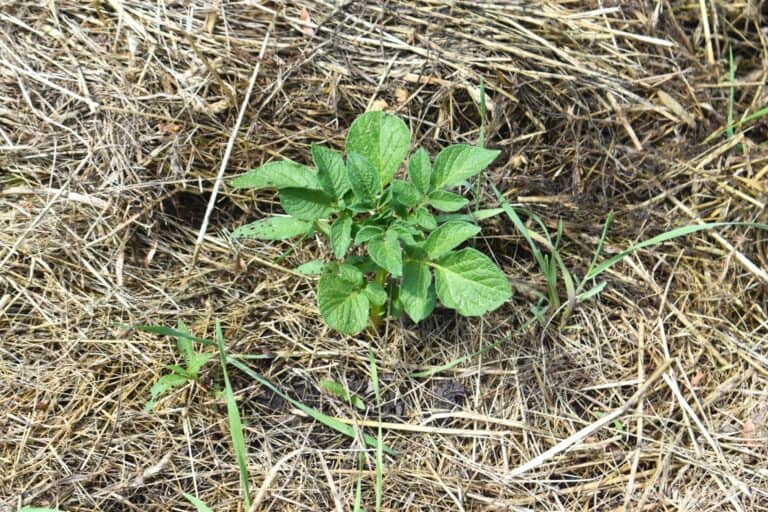
Potatoes are a super versatile ingredient in the kitchen and also one of the most flexible survival crops we can grow.
They are generally easy to grow in a wide variety of soil conditions and are one of the longest-lasting veggies we have: you’ll have to spend time curing them after you bring them out of the ground, but if done properly, you can pop them into your root cellar and expect them to last for months on end.
Potatoes are nutritious, tasty, and easy to grow, but some varieties will take time to mature—upwards of 4 months. Generally, these slower-growing varieties, like Kennebec and Russet-Burbanks, do the best in storage though.
This means you’ll need to plan your planting and allow extra time for curing to put spuds in your survival rotation. Believe me; they are well worth the effort.
Sweet Potatoes
- Nutrients: Lots of carbs, fiber, vitamin A, vitamin C, and manganese.
- Survival Perks: Excellent storage life, drought-resistant, easy to grow even in poor soils.
Although potatoes and sweet potatoes are very different plants botanically speaking, they have a lot in common culinarily and for our purposes.
Sweet potatoes are loaded with nutrients, including essential vitamins, and they can last as long—or even longer—than potatoes in storage.
Most varieties are also famously tolerant of rough conditions, so if you don’t have great soil or you are just a beginning gardener, these are a great choice. Depending on the variety, they need anywhere from 3 to 4 months to mature.
Garlic
- Nutrients: Very high in manganese and vitamin B6.
- Survival Perks: Extremely long shelf life when cured, health-boosting properties, natural pest repellent, requires very little effort to grow.
Garlic is, frankly, indispensable in the kitchen. Whatever savory recipe you are cooking up, whatever kind of cuisine, chances are high that garlic is what makes it actually good!
Garlic is the slowest-growing plant on our list, needing anywhere from 7 to 9 months to mature, and it’s typically planted in the fall for harvest in the summer of the following year.
Despite this, its versatility in the kitchen and known health-boosting properties make it a must-have.
It’s also an essential inclusion in your garden for other reasons; garlic is a potent repellent for all kinds of insect and mammalian pests, meaning it can keep hungry critters away from your hard-earned harvest.
Kale
- Nutrients: Loads of vitamins A, C, and K, high in calcium, packed with antioxidants.
- Survival Perks: Super nutritious, basically a natural multivitamin, very easy to grow, can be harvested continuously, cold-resistant.
Love it or hate it, there is no arguing against kale’s nutritional profile. It’s packed with minerals and vitamins alike and is one of the most well-rounded salad veggies.
It’s also pretty easy to grow, capable of continual harvest (you can just pick leaves as you need them), and it’s famously frost-resistant; it will readily survive and even sweeten with frost and can withstand snow!
Cabbage
- Nutrients: Good amounts of vitamin C and vitamin K, also a great source of fiber and various antioxidants.
- Survival Perks: Long-lasting when kept cool, easily fermented into sauerkraut, highly cold-resistant while growing.
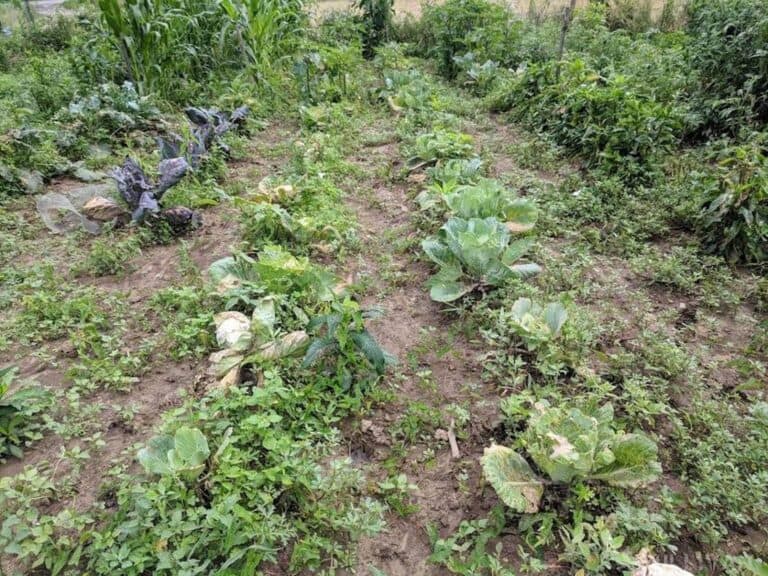
Cabbage is another nutritious leafy vegetable and one that can do double duty as a survival staple when you ferment it into sauerkraut. Even if you don’t like it, you should learn to love it because it can last so long and offer additional health-boosting benefits.
Depending on the variety, your cabbage might be fully formed and ready to harvest in just 2 months, but some will take up to three.
Beets
- Nutrients: Fiber, iron, potassium, manganese, folate.
- Survival Perks: Greens and roots are edible, easily grows in poor soil, stores for many months when kept cool, grows quickly.
Beets are nutritious, tasty, and highly versatile as a survival food. Both the bulbous roots and the greens are edible as-is and can be prepared in a variety of ways.
The root is also delicious and long-lasting when pickled. Even if you don’t want to pickle them, as long as you keep them cold, the roots will last for at least 4 months in storage.
Most varieties also grow pretty quickly, being ready to pick in a little less than 2 months.

Winter Squashes
- Nutrients: All offer a great source of complex carbohydrates; most varieties are good sources of vitamin A, vitamin C, and potassium.
- Survival Perks: Very long-lasting in storage, nutritionally dense, versatile in many different recipes.
I’m sort of cheating here by categorically including winter squashes as a whole. But it’s my article, and I can do what I want!
Whether you want pumpkins, butternut, acorn, or some other variety, you’ll be assured a bounty of delicious flesh that can be roasted, incorporated into soups, pureed, used for pie fillings, and a lot more.
If you’ve got a cool basement or a root cellar, you can also keep your winter squashes on hand for months, meaning you’ll be under less pressure to use up your harvest.


Tom Marlowe practically grew up with a gun in his hand, and has held all kinds of jobs in the gun industry: range safety, sales, instruction and consulting, Tom has the experience to help civilian shooters figure out what will work best for them.