
Nothing’s worse than running out of glue, or finding a dried-up old bottle, when you need some. Worse yet, you’ve got to run out and drop a few bucks on a new tube when you may only need a little bit. Whether it’s accident or procrastination, if your glue supply has gone dry and you’ve got a project close at hand, you don’t need to dash to the store. You can whip up your own in just a few minutes using ingredients I’ll bet you’ve got in your pantry this very second: cornstarch, corn syrup, and vinegar, mainly.

Too good to be glue, er, true? Not at all! Keep reading and I’ll share a recipe with you that works perfectly on paper, cardboard, and light-duty use for wood and sheet goods. Let’s get a move on.
Supplies
Water, 1 ½ cups: Tap water works fine, but if you want to make a really good batch of glue, use distilled water or spring water. Tap water often has strange chemicals and too much mineralization, which can mess with the finished product.
Cornstarch, ½ cup: Common cornstarch. Any brand will work; just make sure it is fresh and not moldy or clumpy.
White vinegar, 2 tsp: White vinegar has the perfect amount of acidity to cause the reaction we’re looking for. Don’t use balsamic or red wine vinegar for this recipe.
Light corn syrup, 4 tbsp: This acts as a binder and helps incorporate all of the other ingredients, promoting the reaction which will turn everything into a super-sticky but smooth and easy-to-apply glue.
Saucepan: Any kind of saucepan will work here. However, I strongly recommend you use an old battered one that you’re done cooking with. If you’ve got one handy that’s been relegated to shop or project use, now’s the time to haul it out.
Whisk: Self-explanatory.
Airtight jar: For storing leftover glue. Glass works best.
Brush or spreader: For applying the glue. Note that this stuff will be pretty hard on brush bristles, even if you clean it right after you’re done. I recommend you use a disposable paintbrush or other brush that you don’t care about for application, or else something you can just throw in the garbage afterward, like a skewer or popsicle stick.
That’s all you need. I’ll tell you how to make the glue in the next section.
Instructions
Step 1: Pour water into saucepan; turn on heat. Medium heat is fine. You don’t need to bring it to a rolling boil right away or anything.
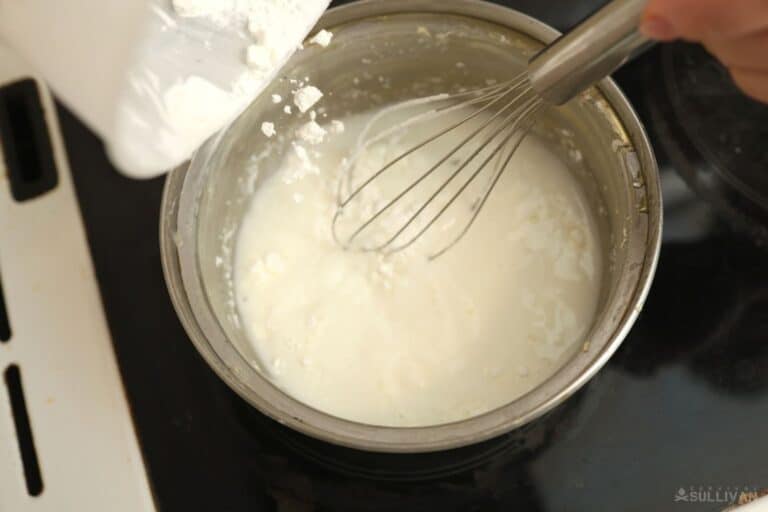
Step 2: Add cornstarch to pan; whisk until smooth. Adding just a little bit at a time, pour the cornstarch into the water while whisking continuously. Keep whisking until all of the clumps have disappeared.
Step 3: Add corn syrup and vinegar to pan. Once the cornstarch is smooth, add the corn syrup and the vinegar, stirring continuously the entire time.
Step 4: Stir constantly until glue thickens. Watch the heat and keep on stirring. The mixture should start to thicken rapidly as it heats up.
Step 5: Cut heat; remove pan. Once the glue is thick enough, about the consistency of runny frosting, it is done. Turn off the burner and move the saucepan to a cold burner or to a trivet so it can cool down a little bit.
Step 6: Pour glue into airtight container. Let the glue rest for a few minutes, giving it a few more stirs as needed to check for smoothness, then pour it into your airtight container.
Step 7: Allow to cool before use. Let the glue cool all the way down to room temperature before you use it.
Step 8: Apply with brush or spreader. Take care to manage drips and avoid excess squeeze-out.
Step 9: Store extra glue in fridge. If you’re done and have any left over, you can stash the surplus in the refrigerator to preserve it. It will last about 2 weeks before it cures up.
Step 10: Done! Congratulations, you made and used your own cheap, easy, but effective cornstarch glue.
This Glue Takes a Little While to Cure
Cornstarch glue usually takes 2 to 3 hours, sometimes more, to fully cure depending on the ambient temperature, humidity, and other factors.
If you are gluing lightweight materials like paper, fabric, or lightweight sheet goods, you probably don’t need to clamp them together. However, when joining two pieces, clamps will produce a better bond while curing occurs.

Tom Marlowe practically grew up with a gun in his hand, and has held all kinds of jobs in the gun industry: range safety, sales, instruction and consulting, Tom has the experience to help civilian shooters figure out what will work best for them.