
There’s an old saying that I first learned from my great-grandpa: “meat on the hoof won’t spoil.” This means that the meat we eat won’t go bad as long as the animal it comes from is still alive and well.
So many preppers focus on stockpiling preserved or processed food in their pantry or storeroom. This is a great thing, no doubt, but the thing is that once that food supply dries up or expires in time, it is gone for good.
A better way to ensure your food security, or to make your stockpile last longer, is to raise your own animals.
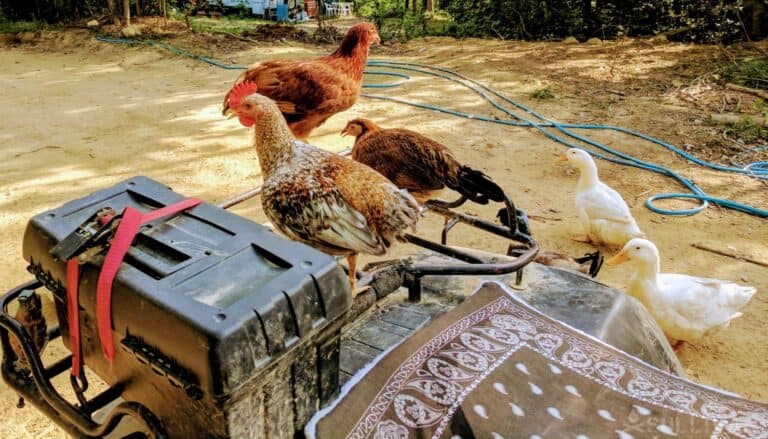
For preppers, chickens and ducks are two of the best bets. Both are inexpensive, easy to keep, very prolific, and can supply you with meat and eggs. You can make a great case for both species, but which ones are truly best?
That’s what we’re going to find out in this article. Keep reading, and I’ll be comparing all the aspects of these two domestic birds.
At a Glance
If you are heading to the hatchery right this second and need a 60-second breakdown of both birds, this is what you need to know.
Domestic ducks tend to be larger than chickens on average and need more space in their enclosure and inside their shelter. Ducks nest and rest on the ground as a rule, whereas chickens greatly prefer to get up off the ground on roosts.
Both birds can produce lots of eggs, but chickens make more in a few years’ time, while ducks tend to lay fewer eggs but for a longer part of their life.
Ducks, of course, have to have water for swimming and bathing, but also to help them eat their food.
Both birds are omnivores, but ducks eat a higher preponderance of insects, aquatic creatures, and aquatic plants. They also need significantly more protein and niacin in their diet.
Both species can tolerate seriously cold weather, but ducks are very resistant thanks to their waterproof feathers and additional fat layer.
Lastly, while both species will make a terrible mess in their shelter and on your property, ducks are extremely messy because they get wet and tend to stay that way, tracking mud everywhere.
Bottom-Line Up Front: Which Breed is Best for Preppers?
I say chickens. Chickens are more widely available, extremely consistent egg producers, produce plenty of delicious and versatile meat, and they are easier to care for overall, and also easier to butcher.
You’ll find no shortage of healthcare providers out there for them, and information that can teach you how to care for them.
But ducks have specific advantages: if you live in a very cold area or have brutally cold winters, ducks will be a lot less bothered by them and far more likely to keep laying eggs right through the winter.
For folks who don’t want to deal with breeding or replacement within the flock, ducks also have a longer laying life on average if eggs are all that you are worried about.
Ducks also tend to get along better in larger flocks compared to chickens, but they can make a truly hideous mess, and keeping their water feature clean is a full-time job.
That said, you can make a great case for either species when it comes to food security and self-sufficiency. If you want to find out how and why I made this determination, read on!
How Much Room?
Both chickens and ducks tend to be pretty space-efficient compared to any other kind of livestock you could own, but here chickens have a slight edge.
As a rule of thumb, ducks will need anywhere from 10 to 15 sqft per adult bird out in the run or other enclosure, and about 5 ½ to 6 square feet per adult inside their shelter, commonly called a duck house.
Chickens wil need less space in the run or other enclosure, just 8 to 10 square feet per adult. Adults need only four square feet to themselves inside the coop. This is because they tend to sleep shoulder to shoulder when on their roosts!
If possible, provide more space for both birds. Giving them more room to stretch their legs and have personal space will always improve their health and overall well-being.
Consider the guidelines above as acceptable minimums for both, and plan out shelters and runs accordingly.
Average Size
The size of both species varies considerably depending on the breed, but again, a dependable rule is that ducks tend to be bigger. An average adult duck will weigh between 6 ½ and 8 pounds, while your average chicken usually weighs between 5 and 6 pounds.
There are tiny and giant breeds to consider for both, though, from the diminutive and adorable Call duck to the colossal Jersey Giant chicken. You can find examples among both species that could weigh just 3 pounds or less, or come in at a scale-busting 12 pounds plus!
Lifespan
This can vary considerably. Most chickens live between 6 and 8 years, though heritage breeds that are given great healthcare and quality of life can reach 10 years and beyond.
This is great if you want a pet, but remind yourself that birds that reach this old age produce very poor quality meat, and most hens will have stopped laying years before they reach the end of their natural life.
A duck will typically live longer, usually between 8 and 12 years on average. Some can live to be considerably older, and ducks that reach 14 aren’t unheard of. Compared to chickens, though, the breed-specific average lifespan of ducks is more variable.
Muscovies, for instance, tend to be long-lived, while Pekins, the most popular domestic breed for meat production, have an average lifespan of only 6 years.
Shelter Needs
Though very similar, the shelter needs of chickens and ducks are not interchangeable. As mentioned above, ducks will need a larger shelter as a rule, but it might need to be even bigger than you calculate because of their differing sleeping habits compared to chickens.
Chickens roost, getting up off the ground on bars and other perches when inside the coop, and they typically sleep quite close together and do so amicably. Because of this, coops tend to be a little taller, more vertically oriented compared to a duck house.
Most ducks, outside of tree-dwelling species, nest strictly on the ground, and that means that a duck house needs to be wider to provide usable space for the flock.
In a chicken coop, you can install roosting bars in a staggered, or staircase, fashion vertically to make better use of otherwise wasted space on the inside.
This makes the installation of a chicken coop more straightforward and often more of a value proposition compared to a duck house. In both cases, shelters for either species must be sturdy, warm, and provide dependable protection against predators that would get after them at night.
Environmental Adaptability
Both ducks and chickens are known for tolerating the worst weather out there. However, ducks have a decided advantage here.
Most duck breeds will be entirely happy and active in temperatures as low as 0°F. Rain and snow won’t bother them, as their feathers are supremely waterproof and they have a special, insulating layer of fat that keeps them warm and happy.
Some duck breeds, like the Pekin, Rouen, and Khaki Campbell, have proven to be amazingly resistant to blisteringly cold weather.
In contrast, most chicken breeds are okay down to about 20°F or a little lower as long as the weather isn’t too bad. Some cold-hardy breeds, like Orpingtons and Wyandottes, may withstand short-term exposure to temps around 10°F or lower.
If you live in a truly frigid environment, ducks will be easier to care for and better able to take care of themselves with a little help when it’s truly cold. In either case, though, both species must have warm shelters to retreat to and dry ground to stand on.
When it comes to heat, ducks and chickens are about neck and neck and do okay up to 80°F without much worry.
Ducks have an advantage here because they will take to the water to cool down if required. Both birds need available shade from the sun at all times in case they start to overheat.

Handling and Aggression
Good news here: both birds are pretty easy to handle as long as you know what you’re doing and they are raised right. Both will readily bond with their human keepers if raised with socialization, affection, and adequate bribery from a steady supply of treats.
When it comes to social interaction among themselves, though, ducks tend to get along a lot better with each other.
Chickens have a pecking order, and it is enforced. High-status birds and their lieutenants tend to be domineering over those beneath them. They get higher roosts, preferential access to feed and water, and more.
Low-status birds might get bullied so much they develop mental problems or even get physically attacked. These issues can be managed, but never truly eliminated.
Something else to keep in mind is that males of both species, and roosters particularly, can be significantly more aggressive and standoffish than hens.
If you desire birds that will eat out of the palm of your hand and not give you any problems during routine interaction, there are good breed choices for both: for instance, Pekins among ducks and Buff Orpingtons for chickens.
Flightiness
Contrary to popular belief, neither domestic ducks nor chickens, broadly, are particularly flighty. Nevertheless, there are more flighty duck breeds than there are flighty chickens, especially when considering individual variations.
You’ll need to be most concerned when dealing with the lightweight duck breeds, especially mallards.
Khaki Campbells are another breed that is known to be ready to take wing at a moment’s notice, so clipping flight feathers is a routine chore you’ll have to take care of after each molt.
Heavier duck breeds, like Rouens, Pekins, and most Muscovies, cannot fly at all.
Do keep in mind that both chickens and ducks can still make surprising vertical leaps with the aid of their wings, so fencing that is between 3 and 4 feet tall is usually called for to keep flightless birds contained.
If preventing escape with minimal input is high on your list of priorities for whatever reason, definitely consider chickens.
Egg Output
One of the main and best reasons to keep ducks or chickens is, obviously, eggs.
The short version is that you won’t go wrong with either bird. Even a small flock of productive hens can keep you, your extended family, your neighbors, and much of your neighborhood completely stocked with eggs throughout the year. But metrics are important, so let’s look into them…
Chickens are generally the queens of egg production, with the most productive breeds, like Orpingtons and Australorps, laying 325 eggs a year, though this output is relatively short-lived.
Most chickens will be highly productive for their first two years of life, and then it tapers off significantly thereafter.
Comparatively, most ducks don’t lay that many, or even come close. Some do, though, like the aforementioned Khaki Campbell. These hale and healthy ducks can produce upwards of 300 eggs a year.
A major consideration in ducks’ favor, when it comes to eggs, is that they’re more likely to lay all year round, and they tend to be more productive, longer, than chickens do at the same age. It’s not unusual for you to get five great laying years out of a duck hen.
A very small edge goes to chickens in terms of laying age: most chickens will start laying between 5 and 6 months old, whereas ducks may not start laying until 7 months of age.
Egg Characteristics
Duck eggs are, on average, bigger and heavier than chicken eggs, typically weighing around 3 to 3.3 ounces. Duck eggs are also notably more colorful and, often, more textured compared to chicken eggs.
Their shells will come in a variety of colors, including green and blue, and they will often be speckled. Duck eggs also contain more protein by weight, more fat, and have a markedly richer taste.
Chicken eggs also come in a variety of colors but are typically some shade of white, tan, or brown, and are rarely heavier than 2 ounces.
Both make for great eating and can be used in any sort of dish or recipe that you can think of. However, if you’re used to chicken eggs, you’ll notice the difference in taste and texture of duck eggs immediately, so try before you commit if that is a concern!
Meat Yield and Processing
This is a big consideration for preppers. Ducks and chickens are both viable sources of meat, but there are considerable differences in their yield, growth rates, conversion rates, and more.
Here, chickens reign supreme, with modern broiler hybrids like the Cornish Cross reaching butchering weight as early as 45 days, and rarely longer than 60. Domestic heritage breeds grow more slowly, though, usually ready for the chopping block between 4 and 5 months.
For an adult chicken weighing between 5 and 10 lbs alive, you can expect anywhere from 3 to 5 lbs of meat, with larger birds and larger breeds producing more on average.
Note, though, that commercial broiler breeds typically have plain-tasting meat; heritage birds have better flavor but lower yield.
Chickens are also notable for their excellent feed conversion ratio, something you’ll see commonly abbreviated as FCR. Typically, it only takes 1 1/2 to 2 pounds of feed for every one pound of weight gain, per bird, of course.
Looking at ducks, modern domestic breeds that have been hyper-optimized for meat production, like the Pekin, are surprisingly competitive with chickens, though still a little slower: they’ll usually mature between 7 weeks and 2 months. Other domestic breeds reach full maturity, and maximum yield, between 5 and 8 months…
Your typical domestic duck will have an FCR of between 2.3 and 2.7, which, while not nearly as good as chickens, is still very impressive compared to other livestock species you might keep around for food.
Compared to chicken, duck meat is much darker, fattier, and more flavorful universally, and some breeds like the Rouen are renowned for their intense, rich flavor.
Remember, this is only a good thing if you like the taste of duck! If you don’t, it will be off-putting compared to the taste of chicken.
Food Requirements
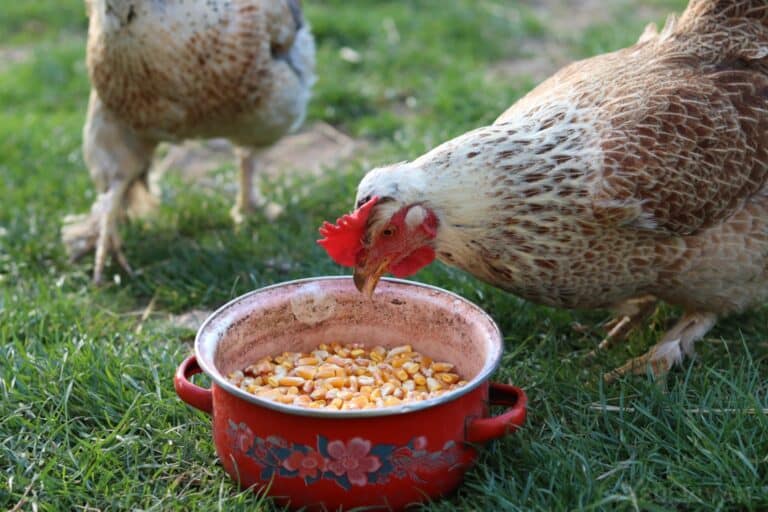
Both species are omnivorous, meaning they eat a variety of plant and animal matter. Grains, seeds, and insects are universally beloved by both birds, though ducks tend to eat more insects, aquatic and marshland plants, snails, and slugs.
Both benefit from a nutritionally well-rounded diet that consists predominantly of feed or pellets.
Note, though, that both birds have specific nutritional requirements: ducks need a lot more niacin and protein than chickens do. For this reason, you should give ducks specialty duck feed or waterfowl feed, and give chickens chicken feed.
If you raise both, you don’t need to freak out if they get into each other’s food from time to time as long as that food isn’t medicated: either can easily overdose on medicated feeds intended for the other.
If you are willing to procure the right kind of feed, it’s easy to take care of either. If you intend to let them free-range much of the time, unless you live near a lake or have a large pond, your ducks won’t find most of their usual food on your property.
Water Requirements
This is where the rubber meets the road with ducks: ducks simply have to have a sizable body of water for health and wellness.
They love to go swimming, of course, but they need water for bathing and a large amount of water for eating their food; ducks dip and dabble their food to help them swallow it, and they routinely swish their faces in it to keep their nostrils clear.
You don’t need a pond or lake to keep ducks, but at the very least you’ll need a good-sized baby pool for a flock of four or five. If you can’t keep such a water feature, don’t get ducks.
Ducks will also heavily contaminate any water source they have access to, necessitating frequent cleaning. More on that in the next section.
Chickens, in stark contrast, only need water for drinking. Chickens avoid getting in the water whenever possible, and they bathe by using dust baths or loose, sandy dirt. This simplifies the keeping of chickens, and also erases a big chore off your list.
Messiness
You really can’t win here: chickens and ducks alike are terribly messy…
They poop pretty much constantly, track it all over the place, and they love nothing more than tearing up your yard, landscaping, and everything else they can get into. Cleaning up after both chickens and ducks will be a constant chore.
That said, ducks are the worst by far: they are constantly swimming in, bathing in, or eating next to water that they track everywhere.
Keeping even a small flock of four or five ducks will cause constant muddy conditions, which can cause problems for you and them: they still need dry conditions on land.
Cleaning up the duck house and trying to dry out the run or surrounding areas will need to be done several times a week.
Predator Concerns
Both of our birds here are very near the bottom of the totem pole when it comes to the food chain: many ground-dwelling and flying predators would love nothing more than to make a meal from either.
But with that consideration, chickens still get the short end of the stick. Everything from domestic dogs and cats to raccoons, coyotes, foxes, wolves, and every other meat-eating creature can and will tear your chickens apart. Chicks and eggs are highly vulnerable to rodents and snakes.
Birds of prey are a major concern for chickens. Hawks, owls, and eagles can strike quickly and with basically no warning, and larger birds can carry away your poor chickens, leaving nothing but a clump of feathers behind.
Ducks have to worry about all of the same terrestrial predators, but they do have an advantage in that they can retreat to the water to get away from many of them (assuming they were already on the water or near enough to get there before the attack.
Larger species of ducks are also less appealing to birds of prey because of their sheer size.


Tom Marlowe practically grew up with a gun in his hand, and has held all kinds of jobs in the gun industry: range safety, sales, instruction and consulting, Tom has the experience to help civilian shooters figure out what will work best for them.